
Fire Rebuild Los Angeles
A complete guide to rebuilding after the 2025 fires - permitting pathways, construction realities, insurance requirements, and what the process actually costs.
January 1, 2026: Senate Bill 495 (Eliminate The List Act) and Assembly Bill 226 (FAIR Plan Stability Act) took effect; the insurance legislation guidance on this page reflects both. Supersedes earlier references to SB 872 as the operative contents-payout bill.
February 12, 2026: LADBS reissued its Palisades rebuild bulletin as Information Bulletin P/BC 2026-157; its grading and soils-report streamlining paths are covered under Special Grading Zones.
April 2026: The Department of Insurance approved the FAIR Plan's 29.1% average dwelling rate increase, effective October 15, 2026, superseding the 35.8% request. The Board of Forestry released its revised Zone 0 draft April 17; that rulemaking remains open.
July 2026: Quarterly review. Permit, market, and infrastructure figures refreshed through May and June 2026 reporting; code and program citations re-verified.
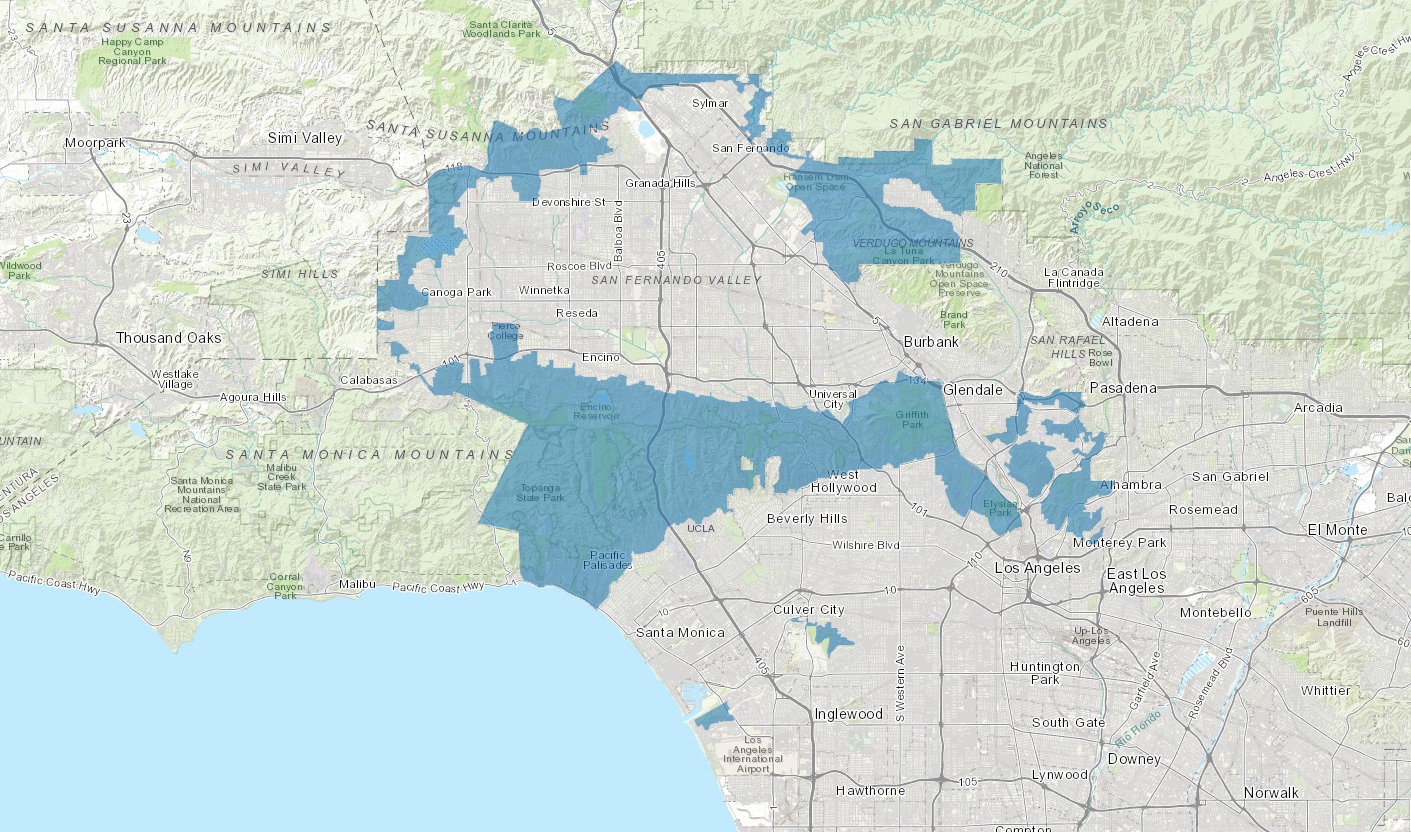
The January 2025 Palisades and Eaton fires destroyed over 16,000 structures across Los Angeles County - the most destructive fire event in the city's history. Eighteen months later, the rebuild is underway, but the process is complex. This guide covers the regulatory requirements, the construction realities, and the insurance carrier requirements that will shape every decision you make.
This page is designed for homeowners navigating the rebuild process, as well as architects advising clients through it. The information here reflects the current regulatory environment as of mid-2026 and will be updated as conditions change.
After a fire, property owners face a sequence of decisions that compound on each other, and the wrong sequence produces delays measured in months and cost overruns measured in hundreds of thousands of dollars. The first visible question is what remains: which structural elements survived, which can be reused, and which must be replaced. But behind that question sits a chain of technical, environmental, and regulatory requirements that all have to be resolved before construction can begin. Environmental testing is required before demolition. The foundation requires structural and geotechnical evaluation before the city will approve reuse. The building department may impose current code requirements on repairs that exceed certain thresholds, meaning a "rebuild" becomes a new-code-compliant ground-up project. Insurance coverage has to be reconciled against actual reconstruction cost, which almost always exceeds the policy's assumptions. Each of these is manageable. But they have to happen in the right order, and they have to be coordinated as a single process rather than handed off between disconnected consultants.
Last substantively updated: April 2026
(Palisades + Eaton)
(Through May 2026)
to Permit
(18 Months Post-Fire)
Who You Actually Need First After a Fire
The instinct after a fire is to hire an architect and a builder and start drawing plans. But the decisions that blow up rebuild budgets get made before design begins, and they have to happen in a specific order. The sequence Benson Construction Group runs on fire-damaged properties: environmental soil testing before demolition, structural and geotechnical evaluation of the foundation before the city will approve reusing it, geotechnical investigation before grading, and an insurance-gap reconciliation before you lock in a scope you can't fund. Do these out of order, or hand them to disconnected consultants who don't talk to each other, and you lose months and often hundreds of thousands of dollars.
The person you need first isn't the architect or the general contractor. It's whoever runs that pre-construction sequence as one coordinated process: ordering the testing, managing the engineers, reconciling the insurance number against real construction cost, and confirming each step clears before the next begins. On a fire rebuild, that coordinating role is a construction manager engaged before design begins, not a builder brought in after the plans are already done.
A History of Fire in Los Angeles
The Palisades and Eaton fires are not just the most recent entries in a long history of Los Angeles wildfires. They are categorically different in scale, speed, and destructive mechanism. The January 2025 fires destroyed more structures in a single week than the previous five major LA wildfires combined. Understanding both the historical pattern and what made these fires unprecedented matters - it reveals why the construction standards that apply to rebuilds have changed, and why the recovery timeline is measured in years.
Why the 2025 Fires Were Unprecedented
The Palisades and Eaton fires burned with a speed and reach that exceeded anything in the recorded history of Los Angeles wildfires. Both fires consumed nearly 80% of their total burn area within the first 24 hours. Wind gusts exceeded 100 mph - equivalent to a Category 4 or 5 hurricane - and unlike typical Santa Ana events that push fires in a single direction, the winds were erratic and multidirectional, shifting course throughout the day and pushing the fires laterally as well as seaward.
But the wind speed alone doesn't explain why so many homes burned. The primary destruction mechanism was ember transport, not direct flame contact. Research from the Insurance Institute for Business and Home Safety (IBHS) estimates that up to 90% of homes lost in wildfires ignite from wind-blown embers rather than the fire front itself. During the Palisades fire, embers were flying an estimated two to three miles ahead of the established fire line and in every direction. Embers entered homes through attic vents, soffit openings, and gaps in building envelopes. Wind pressure created suction - negative pressure - that drew embers into any available opening. Once inside an attic or crawl space, embers ignited insulation, stored materials, and wooden framing. Homes burned from the inside out, even in cases where defensible space had been maintained and the roof was fire-rated.
Fire investigators documented this pattern repeatedly across the Palisades and Eaton burn areas: homes with cleared landscaping and Class A roofing were still destroyed because embers penetrated the building envelope through vents and other openings. Each burning structure then became a source of additional ember generation, creating a cascading chain reaction where structure-to-structure ignition compounded the wildland fire spread.
The Fire History That Shaped Today's Standards
The 2025 fires are the most destructive event in a long history of wildfires shaping the hillside communities of Los Angeles. Understanding this context matters because the construction standards that apply to rebuilds today evolved in direct response to this pattern of loss.
The pattern is clear and accelerating. California's five most destructive wildfires have all occurred since 2017. The Camp Fire (2018) destroyed 18,000+ structures in Northern California. The Woolsey Fire (2018) destroyed 1,643 structures across Malibu and Ventura County. The Tubbs Fire (2017) destroyed 5,636 structures in Sonoma County. And then the 2025 Palisades and Eaton fires destroyed over 16,000 structures and killed 31 people in a single week. Each of these fires was driven by the same basic mechanism: extreme wind events pushing fire through communities faster than suppression resources could respond, with ember transport destroying homes miles ahead of the fire front.
What makes the 2025 fires different from previous events is the combination of scale and location. The Camp Fire destroyed a rural town of 26,000 people. The 2025 fires destroyed neighborhoods in the second-largest city in the country, across some of the most expensive residential real estate in the world, in terrain that adds geological, structural, and regulatory complexity to every rebuild. The construction standards that apply to rebuilds today reflect this entire history - and the 2025 fires have already prompted additional requirements that will shape how hillside homes are designed, built, and insured going forward.
The Current State of LA Fire Rebuilds
As of mid-2026, the numbers reflect a multi-year recovery moving into its construction phase. Three jurisdictions are managing rebuilds across different regulatory frameworks, and the data below is sourced from LADBS, LA County, and City of Malibu permit dashboards, and from Pali Builds, the independent Palisades permit tracker.
Pacific Palisades (City of LA Jurisdiction)
(Through May 2026)
(May 2026 Alone)
(Since the Fire)
Completed (First CO: Nov 2025)
Altadena & Eaton Fire Areas (LA County Jurisdiction)
Submitted
Issued
Construction
(as of March 2026)
LA County relaunched its Permitting Progress Dashboard in December 2025. It now tracks more than 12,000 rebuild projects across seven phases, refreshes every three hours, and is the authoritative source for current Eaton-area counts; the figures above reflect early 2026 reporting.
Malibu
(Fire Area, Early 2026)
for Homes (Early 2026)
(2025 Fires)
Rebuilt (7 Years Later)
Malibu's pace has picked up through 2026: the City issued six additional home rebuild permits between its May and mid-June reports, at least 20 homes are under construction, and the first beachfront rebuild on Carbon Beach reached the framing stage in June 2026. Current counts are published daily on the Malibu Rebuild Dashboard.
Part One: The Regulatory Reality
Understanding the permitting landscape is essential before making any decisions about your rebuild. The rules have changed significantly since the fires, and knowing which pathway your project qualifies for will determine your timeline and costs.
The 110% Threshold: What It Actually Means
Mayor Bass's Executive Order 1 created an expedited pathway for "like-for-like" rebuilds. The key threshold: your new home cannot exceed 110% of the footprint and height of the structure that existed immediately before the fire.
- Building footprint - the horizontal ground coverage area of the structure, including upper-level projections and cantilevers (eaves under 5 feet are excluded)
- Building height - measured at any point; on hillside lots, height calculations depend on slope, baseline elevation, and grading and must be evaluated on a case-by-case basis with LADBS
- Interior square footage - you can reconfigure interior layouts, add lofts within existing volume, fill in under cantilevers, or finish attic space within the allowed footprint and height
- Basements - a new or enlarged basement is allowed and does not count toward height, as long as it stays within 110% of the existing footprint
- New ADUs - attached and detached ADUs are completely exempt from the 110% footprint and height limits
Like-for-Like Rules by Jurisdiction
| Jurisdiction | What the standard measures | Modification allowance | Instruments and windows |
|---|---|---|---|
| City of Los Angeles (Pacific Palisades) | 110% of original footprint and height; interior square footage not counted | Rebuild up to 110%; detached ADUs exempt from the limits | Emergency Executive Orders 1, 7, 8, and 9; applications by January 13, 2032, then 3 years to complete from permit issuance |
| LA County: Eaton fire area (Altadena) | 110% measured against floor area, size, height, and footprint | Like-for-like changes up to 10% or 200 square feet, whichever is greater | County rebuild program; exempt from current Zoning Code but must meet current Building, Fire, and Health and Safety codes |
| LA County: Palisades-area parcels | Same four-factor 110% measure | 10% limit only | Same County program and code requirements |
| City of Malibu | Height, bulk (cubic volume), and square footage; replacement within 50% of the original footprint | Like-for-like per Ordinance No. 524 | Malibu Municipal Code 17.60.020(C): 6 years from the fire to submit a planning application, 8 years to obtain a building permit |
Benefits of qualifying under 110%:
- Initial plan reviews targeted within 30 days (actual average permitting timeline across fire zones is running roughly 90-100 days due to clearance requirements from multiple agencies)
- Permit and plan check fee collection suspended under Emergency Executive Order 7 for owners who held the property as of the fire date
- Exemption from certain requirements, including the all-electric mandate
- Access to suspended CEQA and Coastal Act requirements
- Several departmental reviews waived, including Specific Plan review, Zoning Overlay review, and Hillside Ordinance review (the City reports more than 70% of standard single-family permit clearances no longer apply)
The "Like-for-Like" Reality
Your rebuild will incorporate:
- Current seismic standards, likely more stringent than when your original home was built
- Fire hardening requirements under Chapter 7A VHFHSZ standards that may not have existed previously
- Energy code compliance, including current Title 24 requirements that have evolved significantly
- Accessibility requirements under current ADA standards that apply to new construction
On hillside PGRAZ sites, the foundation may need to be completely redesigned based on current geotechnical standards, even if you're building the same house above it.
"Like-for-like" describes the permitting pathway, not the construction scope. The permitting pathway is streamlined; the construction itself involves current code compliance across every system.
Beyond 110%: Executive Order 8
If your rebuild exceeds 110% of the original footprint or height, you're not disqualified-but you enter a different process. Executive Order 8 extended some streamlined provisions to larger projects, including expanded CEQA and Coastal Act suspensions for single-family home projects.
However, beyond-110% projects will face:
- Standard planning review processes
- Additional clearances and approvals (one contractor reported needing 16 different clearances for a single house)
- Longer timelines (the 30-day target does not apply)
- Full permit and plan-check fees
- Hillside Ordinance review, Coastal review, and Specific Plan review as applicable
For complex hillside sites where the original structure was already constrained by the lot, exceeding 110% may be the only practical path to a functional home. This is a design decision that should be made early, with full understanding of the timeline and cost implications.
One boundary worth knowing: Emergency Executive Order 9 (July 2025) prohibits SB 9 lot-split applications within the Palisades Very High Fire Hazard Severity Zone, which closes off subdivision strategies during the rebuild period.
Energy Code Requirements: The All-Electric Question
One of the benefits of qualifying under the 110% expedited pathway is exemption from the City of LA's all-electric new construction ordinance. If your project exceeds 110%, that exemption does not apply and the City's all-electric ordinance governs your rebuild. Separately, the state has suspended the Energy Code's solar PV and battery storage mandates for wildfire rebuild projects under Executive Order N-29-25 regardless of pathway; the details are in the callout below.
What all-electric compliance means in practice:
- Heat pump HVAC: No gas furnace. Heat pump systems perform well in Southern California's climate but require different equipment sizing and ductwork design than conventional forced-air systems.
- Heat pump water heater: No gas water heater. Heat pump water heaters require adequate airflow around the unit and produce condensate that must be drained - both of which affect mechanical room layout.
- Induction cooktop: No gas range. This is the change homeowners notice most. Induction requires compatible cookware and a dedicated 240V circuit.
- Solar PV system: Required under Title 24 for new residential construction, though fire rebuilds are currently exempt from the mandate (see the callout below). System size depends on conditioned floor area, climate zone, and other factors. The solar industry has evolved significantly since the last code cycle - bifacial panels (which capture reflected light on both sides) now offer 10-20% more energy production per panel than traditional single-face modules, reducing the number of panels needed for the same output. On hillside lots with limited south-facing roof area or complex rooflines, panel selection and placement design become critical to meeting the energy production requirement.
- Battery storage: Title 24 requires new single-family homes to be battery-ready, and installed storage earns compliance credit, but the systems themselves are not mandated for single-family construction, and fire rebuilds are currently exempt from the solar and battery provisions entirely (see the callout below). In practice, most all-electric rebuilds include storage for backup power. The most common residential systems are lithium-ion batteries (Tesla Powerwall, Enphase IQ, Franklin WH) ranging from 10 to 40 kWh of capacity depending on system size and backup requirements. These require dedicated wall or floor space, typically in a garage or utility area, with specific ventilation and clearance requirements. On hillside lots where garages are often at a different level than the main living space, conduit routing and electrical panel placement need to be coordinated during schematic design. The fire safety implications of lithium-ion battery storage should also be evaluated with your insurance carrier, as some carriers have specific requirements for battery installation location and fire suppression.
The cost premium for all-electric construction varies by project, but the combination of heat pump systems, solar PV, and battery storage can add $40,000 to $80,000 or more to a custom home build, depending on system sizing and site conditions. For some homeowners, this cost - layered on top of the longer timelines and additional clearances that come with exceeding 110% - is a factor in the decision about whether to stay within the expedited pathway.
Electrical Service: What Your Rebuild Actually Needs
An all-electric custom home requires significantly more electrical capacity than the gas-fired home it replaces. Understanding the basics of electrical service helps homeowners make informed decisions about panel sizing, utility coordination, and solar/battery design.
How electricity works (the water analogy): Voltage is like water pressure - it's how hard the electricity pushes. Amperage is like flow rate - how much electricity moves through the wire at once. Watts is total power delivery: pressure times flow (volts x amps = watts). Your home's electrical service is defined by its voltage (240V for residential) and amperage (200A or 400A), which together determine how much total power you can draw at any given moment.
200A vs. 400A service: Residential electrical service in Los Angeles is single-phase, 240V. A 200A service provides a practical usable capacity of roughly 38-40 kW (after the NEC 80% continuous load derating). For a 3,000-4,000 SF all-electric custom home with heat pump HVAC, heat pump water heater, induction cooktop, electric oven, Level 2 EV charger, solar inverter, and battery storage, the combined load can approach or exceed what a 200A panel can handle comfortably during peak demand. A smart panel (Span, Leviton) can manage this by throttling non-critical loads - for example, slowing the EV charger when the HVAC is running at peak. But for homeowners who want to run everything without throttling, a 400A service provides comfortable headroom.
LADWP's combo panel recommendation is for up to 400 amps, which signals they expect many rebuilt homes to need it. The incremental cost of 400A vs. 200A during new construction is relatively modest - often $500-$2,000 for the panel and breaker difference - but the service entrance cable, conduit, and utility connection are where the real cost lies. During new construction when trenching is already happening, the cost delta is far smaller than retrofitting later. This is a case where spending the money now avoids a much larger expense later.
Single-phase vs. three-phase: All residential service in LA is single-phase. Three-phase power is used in commercial and industrial settings where large motors require it. A residential rebuild would not need three-phase unless it included unusually large commercial-grade equipment. LADWP's 12 kV system upgrade is a distribution-level change - it does not affect what arrives at your meter.
Solar PV System Sizing
Title 24 requires solar PV on new residential construction, and fire rebuilds are currently exempt from that mandate under EO N-29-25. For a 3,000-4,000 SF custom home in Climate Zone 6 (coastal LA, which includes the Palisades), the required system size is typically 6-10 kW, though the exact number depends on the energy model. A 10 kW system requires approximately 25-30 panels (at roughly 400W per panel), covering 500-600 SF of roof area. Cost for a residential system of this size typically ranges from $25,000 to $40,000 before incentives.
Title 24 also requires conduit and inverter space to be roughed in during construction. For most Palisades rebuilds, the more relevant consideration is sizing the system for actual consumption rather than the bare code minimum - including heat pump HVAC, EV charging, and battery charging loads - which often suggests a system larger than the Title 24 floor.
Battery Storage Sizing
For a 3,000-4,000 SF all-electric home, 20-30 kWh of battery storage provides meaningful backup capability. The most common residential systems:
- Tesla Powerwall 3: 13.5 kWh usable capacity per unit, integrated inverter, 11.5 kW continuous output. A single unit backs up essential loads; two units (27 kWh) support whole-home backup for most houses. Approximately $12,000-$15,000 per unit installed. Wall-mounted, requires roughly 24" x 46" of wall space per unit.
- Enphase IQ Battery 5P: 5 kWh per unit, modular (stack multiple units). Commonly configured in 3-4 unit installations (15-20 kWh). Pairs naturally with Enphase microinverter solar systems. Approximately $1,500-$2,000 per 5 kWh unit plus installation.
- Franklin WH (Whole Home): 13.6 kWh usable capacity, integrated inverter and transfer switch, 5 kW continuous output (10 kW peak). Approximately $12,000-$16,000 installed.
Batteries need a dedicated wall area (garage wall is most common), adequate ventilation for thermal management, and compliance with fire setback requirements per NFPA 855 and local fire code amendments. Lithium-ion batteries in residential settings must meet UL 9540 safety certification. Placement should account for fire separation distance from habitable spaces and property lines.
Property Tax Implications: Prop 13 and Your Rebuild
The 110% permitting threshold and the property tax threshold are two separate rules that affect the same design decisions. Understanding both before committing to a scope is essential.
Under Proposition 13, your property's assessed value (its "base year value") is protected at the time of purchase, increasing no more than 2% per year. When a home is destroyed by a Governor-proclaimed disaster, that base year value can be preserved through reconstruction - but only if the rebuild meets specific criteria.
The 120% property tax threshold:
- Below 120%: If the full cash value of your rebuilt home does not exceed 120% of the full cash value of the destroyed home, your existing Prop 13 base year value is maintained entirely.
- Above 120%: The amount exceeding 120% of the destroyed home's value is added to your existing base year value. You are not reassessed on the entire home - only the excess.
- Comparable property: The rebuilt home must be "similar in size, utility, and function" to the original. Additional square footage, bathrooms, or ADUs will be assessed at current market value and added to the base.
AB 245: Extended Rebuild Window
Assembly Bill 245 extended the rebuild window from five years to eight years for properties damaged or destroyed by the Palisades, Eaton, Hurst, Lidia, Sunset, and Woodley fires. This gives homeowners until early 2033 to complete reconstruction and retain their Prop 13 base year value. The 2024 Mountain and Franklin fires are covered by a companion measure, Senate Bill 663.
Immediate steps:
- File a Misfortune or Calamity claim with the LA County Assessor's Office. This reduces your current property tax assessment to reflect the damaged or destroyed condition and preserves your right to reinstate your base year value after rebuilding. Senate Bill 663 extended the filing window for the 2024 and 2025 fires to 24 months from the date of the fire, which gives Palisades and Eaton owners who have not yet filed until early January 2027 (BOE Letter to Assessors 2026/022). Contact the LA County Assessor's Office at (213) 974-3211 with questions about your property's status.
- Property tax deferral: Affected homeowners can defer payment of the next installment of property taxes following the disaster without penalty or interest.
- Base year value transfer: If you decide not to rebuild on the same site, you may be able to transfer your Prop 13 base year value to a replacement property in the same county (within 5 years) or in participating counties statewide. However, you cannot transfer the base value and also receive the reconstruction exclusion on the original property - it's one or the other.
Coastal Zone Complications
Approximately 40% of the Palisades Fire burn area falls within the California Coastal Zone. Much of Malibu is entirely within the Coastal Zone. Of the 6,837 structures destroyed by the Palisades Fire, approximately 4,537 - roughly two-thirds - were located within the Coastal Zone. Under normal circumstances, any development in the Coastal Zone requires a Coastal Development Permit. The Governor's executive orders changed this for fire rebuilds, but the changes came in stages and the boundaries of what's covered are important to understand.
How the Coastal Act suspensions unfolded:
- January 12, 2025 (EO N-4-25): Governor Newsom suspended CEQA and Coastal Act permitting requirements for fire-damaged structures rebuilt to like-for-like specifications.
- January 16, 2025 (EO N-9-25): Extended the suspension to include ADU construction for temporary housing.
- January 27, 2025 (EO N-14-25): Newsom issued a pointed order directing the Coastal Commission to stop issuing guidance or taking any action that conflicts with his executive orders. The Commission had attempted to reassert its role by issuing guidance suggesting rebuilds were still subject to Coastal Act exemption provisions, which the Governor's office characterized as "legally erroneous" and a threat to creating confusion and delay.
- March 27, 2025 (EO N-24-25): Further expanded suspensions to include CEQA and Coastal Act requirements for electric, gas, water, sewer, and telecommunications infrastructure projects.
- April 10, 2025: The Coastal Commission approved Malibu's Minor LCP Amendment (Ordinance No. 524), creating streamlined pathways for disaster rebuilds including exemptions for structures, seawalls, wastewater systems, and temporary housing.
| Your Situation | Coastal Development Permit Required? |
|---|---|
| Like-for-like rebuild (within 110%) | No. Suspended under the Governor's executive orders. No CDP required from either the local government or the Coastal Commission. |
| New detached ADU | No, if for temporary housing purposes. Must observe bluff setbacks if applicable. |
| Infrastructure repair and undergrounding | No. Suspended under EO N-24-25. |
| Project exceeding 110% (EO8 eligible) | Depends. Some may qualify for a Categorical Exclusion (CATEX). Check the CATEX Map from LA City Planning. |
| New development not related to rebuilding | Yes. Full CDP process applies. |
| Palisades Highlands properties | May be subject to conditions of CDP No. A-381-78 (issued 1979), which applies regardless of the executive orders. |
The practical takeaway: If you are rebuilding to roughly the same size in the same location, the Coastal Commission is not in your permitting path. If you want to build larger, add significant new features, or change the footprint substantially, consult with the applicable local planning department about whether a CDP is required. Existing public coastal access easements remain in effect regardless of the executive orders. For more detail on how coastal regulations affect construction in Malibu and along the coast, see our Coastal Construction in Malibu guide, which includes a dedicated section on how the 2025 fires changed coastal permitting.
Very High Fire Hazard Severity Zones (VHFHSZ)
Most properties in Pacific Palisades, Malibu, and hillside areas fall within designated Very High Fire Hazard Severity Zones. This triggers California Building Code Chapter 7A requirements:
- Class A rated roof products (no wood shingle or shake)
- Exterior wall construction meeting ignition-resistant standards
- Ember-resistant venting at all openings
- Fire-rated eave and soffit construction
- Tempered or multi-pane glass in windows
- Deck construction meeting ignition-resistant standards
Zone Zero (AB 3074 and SB 504): State law directs the Board of Forestry to establish an ember-resistant zone within the first 5 feet of every structure: hardscape or approved ground cover, no combustible items, and restricted plant selection. The implementing regulations were still in rulemaking as of mid-2026, with the latest draft released in April 2026. Once adopted, new construction must comply immediately and existing homes phase in over roughly three to five years. For a home being designed now, the practical answer is to design Zone 0 in from the start; insurance carriers are already underwriting to this standard regardless of the rulemaking timeline.
PGRAZ: The Hillside Overlay
Many properties in Pacific Palisades and Malibu fall within Palisades Geohazard Risk Assessment Zones (PGRAZ). If your property is in a PGRAZ area, you face additional requirements regardless of which permitting pathway you pursue:
- Comprehensive geotechnical investigation
- Foundation design addressing slope stability, liquefaction, and seismic hazards
- Potential retaining wall and drainage system requirements
- Grading permits with geological oversight
Fire damage does not waive PGRAZ requirements. In fact, fire fundamentally changes hillside conditions in ways that require specialized geotechnical analysis. The zone maps and address lists are published in LADBS Information Bulletin P/BC 2026-157, Compaction, Soils and Geological Reports for Rebuilding in the Palisades Fire Area (reissued February 2026), which also defines the report requirements for Orange and Yellow zone properties.
Special Grading Zones and Hillside Areas
Properties in designated hillside grading areas face additional requirements:
- Engineered grading requirements: LAMC Section 91.7004 classifies any grading within a designated Hillside Area as "engineered grading" regardless of volume. The 5,000 cubic yard threshold that most people associate with engineered grading requirements applies only to non-hillside locations. Since virtually all of Pacific Palisades falls within designated Hillside Areas, every fire rebuild that involves grading - which includes nearly every project where a foundation needs to be established or verified - requires a grading plan prepared by a civil engineer, soils and geology reports, and professional inspection throughout grading operations. This is not a discretionary requirement. It is the baseline code provision for the Hillside Area designation. The Superintendent of Building can also designate any grading as "engineered" when special conditions or unusual hazards exist, which post-fire conditions almost certainly qualify as.
- Geotechnical monitoring and compaction testing: Your geotechnical engineer needs to be on board before grading begins. They monitor all compaction operations, perform in-place density testing at required intervals, and certify that fill meets the required 90% (or higher) relative compaction. Compaction reports must be submitted to the city before foundation work can proceed. Without a geotech actively engaged during grading, you cannot get sign-off to move forward. (For more on geotechnical timelines, costs, and what a geotech report involves, see our PGRAZ guide.)
- Over-excavation and recompaction: May be required for foundation work - exempt from separate grading permit when performed with a valid building permit
- Haul route constraints: In special grading zones, any significant earth export or import triggers haul route requirements. This means a public hearing, an approved haul route plan with designated truck staging areas, maximum gross weight limits on haul vehicles, and coordination with LADOT. On narrow hillside streets with limited turning radius, haul route logistics can become a major scheduling constraint - particularly when multiple properties on the same street are grading simultaneously.
The same LADBS bulletin provides streamlined compliance paths for eligible rebuilds: soil compaction outside the PGRAZ zones may be self-certified by the consulting civil or geotechnical engineer, grading permits may be waived for excavations limited to footings and grade beams not exceeding 5 feet on relatively level sites, and soils and geology reports approved within the past ten years may be reused when updated to current seismic code. These provisions can save weeks on straightforward sites; PGRAZ properties still require full Grading Division review.
The Hillside Construction Regulation (HCR) District imposes more restrictive grading limits and hauling operation standards than general code. Your property's specific overlay designations will determine which requirements apply.
Multi-Agency Coordination
Even "expedited" rebuilds require coordination across multiple agencies:
| Agency | Role |
|---|---|
| LADBS | Building permits, plan check, inspections |
| LA City Planning | Zoning verification, environmental review |
| Bureau of Engineering | Grading permits, drainage review |
| Coastal Commission | Coastal zone projects |
| LADWP | Utility connections, fire hydrant requirements |
| LAFD / LA County Fire | Fire access, defensible space verification |
| Geotechnical Consultants | Required reports for hillside sites |
Coordinating clearances across multiple agencies is one of the most time-sensitive aspects of the permitting process. Tracking status across all agencies in parallel - rather than sequentially - and knowing which clearances are on the critical path for your specific project is what keeps the permitting timeline moving. Experienced teams treat this as an active management task from day one.
Pre-Approved Plan Programs
Two programs now offer pre-approved architectural and structural plans designed to accelerate the permitting process for fire rebuilds.
The Standard Plan Pilot Program (LA City, Executive Directive 13) provides a library of pre-approved, code-compliant designs for Palisades rebuilds. Plans in the library have already passed plan check, so homeowners who select one skip the standard review cycle entirely. The Foothill Catalog (developed by architects Cynthia Sigler and Alex Athenson) offers a similar set of pre-approved architectural and structural plans for LA County rebuilds in Altadena and the Eaton Fire footprint, with estimated savings of roughly 10% of development costs. Originally built for LA County rebuilds, the Foothill Catalog expanded to Pacific Palisades in March 2026, and the County had approved more than two dozen catalog plans by early 2026.
These programs are worth exploring, particularly for homeowners on straightforward lots who want to move fast. But there are limitations to understand before committing:
- Foundation design is site-specific. A pre-approved plan covers the structure above grade. On hillside lots, the foundation - caissons, grade beams, retaining walls - must be designed by a geotechnical and structural engineer based on your specific soil conditions and slope geometry. The foundation is often the most expensive and time-consuming element on a hillside rebuild, and no catalog plan addresses it.
- Site conditions vary. Setbacks, easements, utility locations, and grading requirements differ from lot to lot. A plan that fits one property may require significant modification for the next one.
- Customization resets the clock. Modifying a pre-approved plan beyond minor adjustments may trigger a new plan check review, reducing or eliminating the time savings.
Pre-approved plans solve a real problem for eligible homeowners. For complex hillside sites, they're a starting point for conversation with your design and construction team rather than a turnkey solution.
LA County is running a parallel set of acceleration tools: the Archistar eCheck pilot uses AI to screen single-family rebuild drawings for zoning compliance before formal submittal in the R-1 zones of unincorporated Altadena and Sunset Mesa, a self-certification pilot covers certain simple projects, and a Bundled Projects program lets builders group multiple rebuilds into one coordinated review. The City of LA runs the same AI pre-plan check tool (E-Check) for all Palisades rebuild applicants through LADBS. If your property is in Sunset Mesa, Altadena, or the Palisades, these tools can compress the front end of the review cycle; County details are at recovery.lacounty.gov.
Third-Party Inspections and Structural Observations
Beyond standard city inspections, hillside fire rebuilds typically require multiple layers of third-party verification:
- Deputy inspection: The city will require a registered deputy inspector for critical structural elements - particularly reinforcing steel (rebar cages) in caissons, grade beams, and retaining walls. The deputy inspector verifies that reinforcement is placed correctly before concrete is poured.
- Structural observations: The structural engineer of record may be required to perform periodic observations during construction, independent of deputy inspection. Some projects require both - structural observations AND deputy inspection - for the same elements.
- Geotechnical compaction monitoring: Your geotechnical engineer must monitor and test compaction progress during all fill operations. They provide density testing at specified intervals and certify that compaction meets the required 90% (or higher) relative compaction. Without passing compaction reports, the city will not approve the next phase of work.
These requirements add cost and scheduling complexity. Identifying which inspections are required early and establishing relationships with qualified deputy inspectors before work begins - not when the rebar cage is tied and waiting for sign-off - is a basic project management task that prevents expensive delays.
In our experience, the coordination is the hard part: deputy inspections, the structural engineer's observations, and city inspections all have to land on the same pours in the right order, and keeping the three tracks aligned is a scheduling job in its own right.
Part Two: Before Construction Begins
Before any building work starts, your property goes through a series of preparatory phases. Understanding this sequence helps set realistic expectations for timeline and costs.
Phase I and Phase II Debris Removal
The January 2025 fires triggered the largest debris removal mission in U.S. Army Corps of Engineers history.
Phase I (EPA): Environmental Protection Agency crews entered properties to remove hazardous materials - batteries, paint, cleaners, solvents, oils, asbestos, compressed gas cylinders, and medical waste. They also coordinated removal of human remains and firearms. Phase I was completed within 30 days, though it was initially anticipated to take months.
Private Phase I assessments: The EPA's Phase I hazardous materials removal was completed across the burn zone, but some properties - particularly those with basements, complex site conditions, or areas the EPA could not safely access - required additional assessment. Property owners in these situations engaged private environmental firms for independent Phase I and Phase II testing, often at significant personal expense. For properties where EPA clearance was incomplete, private testing was not optional - it was a necessary step before rebuilding could proceed. If your property had a basement or other conditions that prevented full EPA access, confirming exactly what testing was performed (and by whom) is an essential early step.
Phase II (Army Corps of Engineers): Beginning February 11, 2025, the Army Corps removed fire-related debris from private properties, including hazardous trees, ash, and structural remains. This phase took 2-10 days per property. The deadline to opt into the government-sponsored program was April 15, 2025. Phase II was completed in September 2025.
| What Phase II Removed | What Phase II Left Behind |
|---|---|
| Structural debris and rubble | Existing foundations (may or may not be salvageable) |
| Hazardous trees | Underground utilities (often damaged) |
| Ash and contaminated surface materials | Retaining walls and site improvements |
| Some foundation elements | Drainage systems (typically damaged) |
Soil Contamination and Environmental Testing
Phase II debris removal cleared the visible destruction, but fire leaves contamination in the soil itself. The Army Corps removal addressed structural debris and surface materials. It did not test or remediate subsurface soil contamination - that's the homeowner's responsibility, and it's one of the most common sources of unexpected cost and delay on fire rebuilds. The federal mission removed 3 to 6 inches of topsoil from the ash footprint without confirmation sampling, and the County has cautioned that confirmation testing may be required at rebuild where adequate proof of cleanup is not on file.
What fire debris leaves in soil:
The contamination profile of an urban wildfire is fundamentally different from a vegetation fire. When an entire neighborhood burns, the soil receives concentrated deposits from every material in every home, vehicle, and piece of equipment on the property.
- Lead: Homes built before 1978 contained lead-based paint. When that paint burns, lead concentrates in the soil. Lead is also released from melted batteries, plumbing solder, and flashing. UCLA's Community Action Project found that approximately 10% of residential soil samples in the Palisades and 40% of samples in Altadena exceeded the 80 mg/kg recommended lead threshold.
- Arsenic: Present in pressure-treated lumber (common in decks and retaining walls built before 2004) and certain pesticides used in landscaping.
- Hexavalent chromium: Released from burned metal finishes, stainless steel components, and some paints and coatings.
- Asbestos: Older homes may have contained asbestos in insulation, floor tiles, roofing, or siding. Phase I removed identifiable asbestos-containing materials, but fiber fragments can remain in soil.
- Polycyclic aromatic hydrocarbons (PAHs): Produced when plastics, synthetic materials, and petroleum-based products burn. Present in ash and can leach into soil.
- Vehicle contaminants: Thousands of vehicles burned across the fire zone. Lithium-ion batteries from electric and hybrid vehicles released lithium, cobalt, nickel, and manganese. Lead-acid batteries released lead and sulfuric acid. Catalytic converters contributed platinum, palladium, and rhodium. Tires released zinc, cadmium, and additional PAHs. Petroleum fluids added hydrocarbon contamination. Vehicle fires burn hotter than structural fires and produce a distinct toxic signature.
- Solar panel compounds: Destroyed rooftop solar arrays released cadmium, selenium, tellurium, lead, and copper compounds into the soil and runoff.
- Electronics and household chemicals: Circuit boards contain lead solder, mercury, cadmium, and beryllium. Brominated flame retardants from electronics casings persist in soil. Household paints, solvents, pesticides, and cleaning products added volatile organic compounds.
- Swimming pool equipment: When PVC pipes, pool equipment housings, and stored pool chemicals burned, they produced dioxins and furans - among the most toxic substances known - along with hydrogen chloride and chlorine compounds.
- PFAS ("forever chemicals"): Per- and polyfluoroalkyl substances entered the soil both from firefighting foam (AFFF) used during suppression and from burned consumer products that contained PFAS coatings. These compounds do not break down in the environment. Heal the Bay specifically tested for PFOS/PFOA in their post-fire sampling.
What independent testing involves:
A Phase I Environmental Site Assessment (not to be confused with the EPA's Phase I debris removal) evaluates the property's history and identifies potential contamination concerns. If warranted, a Phase II Environmental Site Assessment involves soil sampling at multiple locations and depths, laboratory analysis for specific contaminants, and a report with findings and remediation recommendations. Cost ranges from $3,000 to $10,000+ depending on the number of samples, contaminants tested, and site complexity. On properties with known risk factors - pre-1978 construction, pools with equipment that burned, extensive landscaping with treated lumber, or EV/hybrid vehicles that burned on-site - testing at the higher end of that range is typical.
Beach and Coastal Water Contamination
The contamination from the burn zone did not stay on land. When the first significant rainstorm arrived on January 26, 2025, stormwater runoff flushed ash and burned materials from the Palisades burn scar through Rustic Creek, Santa Monica Canyon Creek, and Topanga Creek into Santa Monica Bay. Tidal action deposited the material along the shoreline from Las Flores in Malibu to beaches as far south as Dockweiler near LAX. This was not deliberate dumping or grading - it followed the natural movement of stormwater through an urban watershed that had lost its ability to filter sediment through vegetation and soil absorption. Four months after the fire, debris from homes, electronics, and vehicles remained lodged in storm drain outfalls.
What testing found: The State Water Board collected sand samples at 15 locations from Zuma Beach to RAT Beach. Arsenic was above state safe thresholds at all 15 locations. Lead was present at every site. Independent testing confirmed elevated arsenic, chromium, and mercury that increased after rain events. However, a year-long study by USC's CLEAN Waters Project found that even at peak levels, metal concentrations in seawater and sand remained below EPA safety thresholds and California residential soil standards. The conflicting conclusions highlight a fundamental gap: there are no established human health standards specifically for fire-contaminated beach sand.
The decision not to remediate: LA County Beaches and Harbors chose not to remove the dark sediment from affected beaches, stating that testing did not show levels requiring remediation and that natural tidal cycles would clear the material over time. Heal the Bay criticized this decision, noting the initial determination was based on only two samples. As of early 2026, fire-specific ocean water advisories are no longer in effect, though standard rain-related bacterial advisories continue as they would in any year. Crews continue to remove large pieces of fire debris as they wash ashore.
This is relevant to the rebuild for two reasons. First, it illustrates the scale and pathway of contamination: what washed into the ocean first washed through the soil on properties in the burn zone. Second, ongoing stormwater runoff from the burn scar continues to carry contaminants through drainage channels, which affects erosion control requirements and SWPPP compliance during construction.
Post-Fire Slope Instability and Debris Flow Risk
After vegetation burns off a hillside, slope stability fundamentally changes for 3-5 years. This is not a theoretical risk. It has a body count.
The hillsides above Pacific Palisades are in that same post-fire condition right now. The Palisades burn scar sits above densely developed hillside neighborhoods on steep terrain with the same geological profile: chaparral-covered slopes, deep root systems now destroyed, and soil structure altered by sustained high temperatures. The first two post-fire rainy seasons carry the highest debris flow risk. If you are rebuilding on a hillside lot in the burn scar, or below one, this is not background information - it is an active hazard that affects your site, your foundation design, your drainage engineering, and your construction schedule.
In the days following the January 2025 fires, a home in Pacific Palisades that survived the fire was subsequently destroyed by a dry-weather landslide on the burned hillside above it - before any rain had even fallen.
Why burned hillsides behave differently:
- Hydrophobic soil layers: Intense fire heat vaporizes organic compounds in the soil, which then condense a few inches below the surface and form a waxy, water-repellent layer. Water that would normally absorb into the ground instead sheets off the surface, dramatically increasing runoff volume and velocity. This effect can persist for two or more years after a fire.
- Loss of root cohesion: The root networks of mature chaparral and native vegetation act as a structural mesh that holds hillside soil in place. Fire destroys this reinforcement entirely. The slope that was stable for decades is now held together by nothing but gravity and friction.
- Macropores from burned roots: As dead root systems decay over the months following a fire, they leave hollow channels in the soil that concentrate water flow underground, creating subsurface pathways that can accelerate slope failure from within.
- Altered soil structure: The organic matter that bound soil particles together has been consumed. The result is soil that is both more erodible on the surface and more susceptible to deep-seated movement.
If you're rebuilding on a hillside in the burn scar, your geotechnical assessment needs to account for fundamentally changed soil conditions. This isn't the same geotech report you'd commission on undamaged land. The engineer needs to understand they're evaluating a post-fire hillside, not stable terrain. UCLA researchers are actively studying post-fire slope behavior in the Palisades burn area and still don't have complete models for failure mechanisms on the specific geological formations involved.
Erosion Control and Storm Water Protection
SWPPP Requirements: If your project disturbs 1 acre or more, you're required to file a Storm Water Pollution Prevention Plan under California's Construction General Permit. This means:
- Hiring a Qualified SWPPP Developer (QSD) to assess risk and create site-specific controls
- Installing erosion and sediment control measures before and during construction
- Regular inspections and reporting to the state database (SMARTS)
- Water quality testing following storm events
What SWPPP compliance actually looks like in practice: This is not a one-time filing. The QSD is required to notify you before every forecasted rain event. After each rain, they measure actual precipitation, conduct a site inspection, and write an independent assessment of whether your erosion controls performed adequately. If controls failed or were insufficient, corrective action is required before the next event. This cycle repeats for every rain throughout your construction period. Plan for ongoing monthly QSD retainer fees of $2,000 to $5,000 plus additional inspection fees per rain event. On hillside sites in burn-scarred areas, expect more frequent inspections and stricter corrective action requirements.
Erosion control measures for burned areas: Hydroseeding with native plants, erosion blankets, fiber rolls, sediment barriers, silt fencing, straw wattles, drainage improvements, and temporary slope stabilization. These measures should be planned and staged before the first rain season following site control.
Topographic Surveys and Site Documentation
Before design can begin in earnest, you need an accurate topographic survey of your property. After the fire, existing surveys are largely useless - the landscape has changed, reference points have been destroyed, and the ground surface itself may have shifted on hillside lots.
Modern surveying technology: LiDAR and point cloud scanning have significantly changed how surveys are performed. Surveyors can now walk a property with shoulder-mounted scanning equipment and produce highly detailed 3D terrain models in a fraction of the time traditional methods required. This technology is particularly valuable on steep or irregular hillside sites where conventional survey methods are slow and expensive.
Coordinate with your neighbors: If multiple properties on your block need surveys (and they likely do), grouping survey work with adjacent owners can reduce per-property costs. A single surveyor mobilization covering multiple lots is significantly more cost-effective than individual engagements. Talk to your neighbors early about coordinating this work. Expect to pay $10,000 or more for a topographic survey on a hillside lot in the Palisades.
Foundation Evaluation: The Critical Early Decision
The most consequential early decision on any fire rebuild is whether the existing foundation can be reused. For a detailed walkthrough of the structural and geotechnical evaluation process specific to fire-damaged foundations, see our Fire-Damaged Foundation Certification guide.
Why you cannot assume the foundation is usable:
Fire subjects concrete and steel to extreme temperatures. The effects aren't always visible:
- Concrete spalling and delamination: High heat causes moisture inside concrete to expand, creating internal fractures not visible on surface
- Steel reinforcement damage: Rebar loses strength when exposed to sustained high temperatures - permanent and invisible. See our Structural Remediation guide for more on evaluating and addressing structural damage.
- Foundation-to-soil interface: Fire may have altered soil conditions around and beneath the foundation
- Retaining wall integrity: Fire-damaged walls may have compromised structural connections or lost passive soil retention from vegetation
What proper evaluation requires:
- Visual inspection by a licensed structural engineer
- Non-destructive testing (NDT) including concrete core sampling and rebar scanning
- Geotechnical evaluation of soil conditions (required for PGRAZ sites regardless)
- Assessment of existing drainage and waterproofing systems
Geotechnical Requirements for Hillside Rebuilds
For hillside properties in PGRAZ areas and other steep-slope sites, geotechnical engineering is a required element of the permitting and design process.
What the geotechnical report will determine:
- Foundation system requirements (spread footings, grade beams, caissons, etc.)
- Retaining wall specifications
- Grading and drainage requirements
- Slope stability recommendations
- Setback requirements from slopes
Cost implications: Hillside foundation systems are significantly more expensive than flat-lot construction. Caisson foundations-drilled concrete piers extending to stable bedrock-can add substantial costs depending on the number, depth, and diameter required by site conditions. This isn't optional if the geotechnical report requires it.
Infrastructure and Utility Coordination
Roads, water mains, sewer lines, gas, and electrical service may all be damaged or require upgrades. These involve coordination with agencies and utilities on their own timelines, which makes early identification important.
LADWP reconnection: Utility reconnection isn't automatic. You may face new service requirements, upgraded meter installations, and fees for infrastructure improvements.
Sewer capacity: Studies may be required for larger homes or significant increases in fixture counts.
Underground utility relocation: Damaged utilities may need to be replaced as part of site work-often discovered during excavation.
Shared Retaining Walls and Neighbor Coordination
Adjacent hillside properties often share retaining walls, drainage systems, and lot line walls. When both houses burned, the coordination challenges multiply.
Common coordination questions on adjacent rebuilds:
- Who's responsible for the shared retaining wall if both properties are rebuilding?
- What if your neighbor isn't rebuilding on the same timeline-or at all?
- What if an investor bought their lot and is sitting on it indefinitely?
- What if their rebuild design conflicts with your drainage requirements?
- Who pays for engineering on a shared system?
These create legal, engineering, and construction coordination problems. Retaining walls serving both properties need to be designed for both properties' loads and drainage. If your neighbor isn't rebuilding, you may need to design systems to function independently-more expensive than shared solutions. You may also need easements or agreements for construction access.
Legal considerations: Existing easements, CC&Rs, and property line agreements may need to be reviewed or renegotiated. Shared wall disputes sometimes require mediation before construction can proceed.
This type of pre-construction coordination, where environmental testing, foundation certification, geotechnical investigation, and permitting all need to be sequenced and managed before construction begins, is what Benson Construction Group structures as a focused engagement on fire-damaged properties.
Part Three: The Construction Reality
Permitting is the regulatory pathway. Construction is the physical execution - building on a site where soil conditions have changed, utilities need to be reconnected or replaced, and costs need to be reconciled with available funding.
Construction Timeline Reality
Realistic overall timeline for a custom hillside home: 18–30 months from permit to occupancy, depending on site complexity.
The specific duration varies significantly based on:
- Whether there's an existing foundation or shoring walls to evaluate or remove
- Whether large removal and recompaction work is required
- Whether contaminated soils need additional remediation
- Site access conditions (narrow streets, steep driveways)
- Weather during grading and foundation work
- Material lead times for custom elements
- Subcontractor availability in a market with thousands of concurrent rebuilds
Flat-lot rebuilds with minimal site work will be faster. Complex hillside sites with caisson foundations, extensive retaining walls, and difficult access will take longer.
Woolsey rebuilds in Malibu required full Coastal Development Permits for most properties, with no emergency exemptions in place. There was no equivalent of EO1's expedited "like-for-like" pathway. Every rebuild went through standard planning review, Coastal Commission oversight, and the city's Local Coastal Program requirements - a process that took an average of six years outside the burn area for normal projects. The 2025 Palisades fires benefit from significantly more regulatory relief: Governor's executive orders suspending CEQA and Coastal Act requirements, EO1's 30-day review targets, and fee waivers. But Malibu's experience demonstrates that even with strong homeowner intent, hillside coastal construction is inherently slow - and the 2025 fires involve a much larger scale (5,500+ homes vs. 488) with many of the same geological and coastal complexities.
The Additional Living Expense (ALE) Clock
While you're rebuilding, you need somewhere to live. Temporary housing near the Palisades runs $15,000+ per month. ALE policies have caps and time limits-typically 24 months, sometimes 36 with extensions.
With realistic construction timelines of 18–30 months for complex hillside rebuilds, many homeowners will exhaust ALE before they're done building.
Planning for ALE timing:
- Start with realistic timeline projections so you can plan financially for the full construction duration
- Review your specific ALE limits and extension provisions with your carrier early in the process
- Budget for the possibility of out-of-pocket housing costs in the final months if your build extends beyond ALE coverage
- Make design and scope decisions early and commit to them, because mid-project redesign is the most common cause of timeline extension
Knowing your ALE duration and your realistic construction timeline allows you to plan for the gap between them, rather than discovering it mid-build.
The ADU-First Strategy
One approach that architects and construction managers are increasingly recommending: build a detached ADU first, occupy it while the main house is under construction, and eliminate the ALE clock entirely.
The math works because of how the expedited permitting rules are structured. Detached ADUs are completely exempt from the 110% footprint and height limits - they don't count toward the threshold at all. They qualify for the expedited permitting pathway on their own, with plan review timelines measured in weeks rather than months. A well-designed 800-1,200 SF ADU can be permitted, built, and occupied in a fraction of the time it takes to complete a main house - particularly a complex hillside home with caissons, retaining walls, and extended consultant coordination.
Why this works financially:
- Reduces or eliminates temporary housing costs: With temporary housing near the Palisades running $15,000+ per month, an ADU that gets you on-site significantly reduces the burn rate on ALE or out-of-pocket housing. On a 24-month main house build, that can preserve hundreds of thousands of dollars. However, whether your carrier continues ALE payments after you move into an on-site ADU depends on your specific policy language and carrier interpretation. The legal standard ties ALE to the period until the primary dwelling is rebuilt. An ADU is not the primary dwelling, and a reasonable argument exists that ALE continues. But carriers may push back. Get your carrier's position in writing before making the move - and consult an insurance attorney or public adjuster if the answer is unfavorable.
- Creates long-term value: After the main house is complete, the ADU becomes a rental unit, guest house, home office, or caretaker quarters. It's not a temporary expense - it's a permanent addition to the property.
- Avoids the ALE crunch: Homeowners who exhaust ALE before their main house is finished face the worst possible combination - paying out-of-pocket for housing while also funding construction. The ADU-first approach reduces that risk substantially.
What to plan for: The ADU needs its own foundation design, utility connections, and site work. On hillside lots, placement of the ADU relative to the main house matters - you don't want to put it where it blocks crane access, material staging, or excavation routes for the primary construction. ADU placement should be coordinated with the overall site plan and main house construction sequence during pre-construction, not treated as an afterthought once building begins. Note that ADU construction costs per square foot tend to scale toward the higher end of residential ranges - smaller buildings carry proportionally higher costs because the fixed costs of foundation, utility connections, kitchen, and bathroom don't shrink with the footprint.
Both the City of LA and LA County have also authorized temporary structures on fire-damaged properties during active reconstruction, subject to permitting requirements that vary by jurisdiction.
Labor and Material Market Pressure
Thousands of concurrent rebuilds are competing for the same subcontractors and the same materials.
Current market realities:
- Extended lead times: Doors and windows are running 16 to 24 weeks. Structural steel is 12 to 16 weeks. Custom cabinetry is 2 to 3 months. These lead times affect when materials need to be specified and ordered relative to the construction schedule.
- Subcontractor availability: Qualified hillside contractors are in high demand; scheduling trades requires longer lead times
- Market volatility: Material pricing is fluctuating due to tariff uncertainty, supply chain disruptions, and the sheer volume of concurrent projects - costs that were stable six months ago may not hold today
- Labor market constraints: The construction labor pool was already tight before the fires; immigration enforcement actions have further reduced available workers, particularly in the trades that support residential construction
What this means for your project:
- Insurance estimates based on pre-fire pricing may not reflect actual costs
- Material selections made early in design may not be available when you need them
- Subcontractor commitments need to be secured earlier than in normal construction
- Schedule contingency should assume some delays, not zero
Neighborhood Construction Sequencing
On narrow hillside streets, your neighbors' construction schedules directly affect yours.
Logistical realities when multiple houses rebuild simultaneously:
- Crane access: Mobile cranes may need to swing over property lines; coordinating crane schedules with adjacent sites requires formal agreements
- Material staging: Limited street width means materials can't always be staged in front of your lot
- Concrete pours: Multiple concrete trucks on a narrow street require scheduling to avoid gridlock
- Equipment delivery: Large equipment may need street closures or early-morning delivery
- Street parking: Construction crews need to park somewhere-multiply by five houses on the same block
If your neighbor's concrete pour is scheduled for Tuesday and yours is Wednesday, and there's only room for one pump truck, someone needs to coordinate. If nobody does, one project gets delayed.
Budget Reality vs. Insurance Payout
The gap between what insurance pays and what rebuilding actually costs has emerged as the primary barrier to Palisades rebuilding - ahead of permitting, ahead of contractor availability. The data explains why.
The structural problem with replacement cost:
"Replacement cost" as your carrier defines it is an estimate of what the home would cost to rebuild at the time the policy was issued - not what it will actually cost to rebuild after a total-loss event in a high-demand market under current building code. The estimate is generated using tools like Xactimate, which applies standardized pricing databases to a description of the home's features. The problem is systemic, not a matter of individual carrier bad faith:
- The baseline is the home that was, not the home that must be built: Your original home may have been built to 1960s or 1980s code. Your rebuild must meet 2025 code, including seismic upgrades, fire-hardened assemblies, energy code compliance, solar PV, and battery storage. The cost difference between those two construction standards is substantial, and standard replacement cost estimates do not fully account for it.
- Outdated regional pricing: Xactimate database values lag behind actual market costs, especially during demand surges when thousands of concurrent rebuilds are competing for the same labor and materials.
- Omitted hillside costs: Standard estimates do not account for caissons, retaining walls, shoring, or specialized foundation work that is routine on Palisades hillside lots.
- Custom finishes priced as stock materials: Custom millwork gets coded as commodity cabinets. Solid hardwood floors get coded as laminate. The estimating system defaults to builder-grade specifications.
- No allowance for post-fire soil conditions: Additional geotechnical investigation and remediation on fire-damaged hillsides is not in standard Xactimate templates.
- Missing soft costs: Extended project timelines, permit fees, engineering, consultant coordination, and the complexity premium of building in a constrained market are not fully captured.
The distinction between guaranteed replacement cost and standard replacement cost policies matters enormously. Guaranteed replacement cost policies pay whatever it actually costs to rebuild, regardless of the dwelling limit. Standard replacement cost policies pay up to the dwelling limit plus any extended replacement cost endorsement (typically 25-50% above the limit). Most Palisades homeowners had standard replacement cost policies, which is why the gap exists.
Cost Ranges for Custom Home Construction (Mid-2026)
Construction costs are fluctuating. Material prices, labor availability, and demand conditions in a market with thousands of concurrent rebuilds all affect pricing. These ranges reflect current conditions but may shift.
| Project Type | Cost Range (per SF) | What This Level Typically Includes |
|---|---|---|
| Flat-lot rebuild (standard to custom finishes) | $650 – $1,100 | Builder-grade rebuilds with stock windows, doors, and fixtures land at the lower end; custom flat-lot construction with architect-designed specifications runs $850 to $1,100. Straightforward site conditions, conventional foundation. |
| Hillside custom home | $1,000 – $1,400+ | Engineered foundation systems, custom millwork and finishes, hillside-specific structural requirements. Significant site work, retaining walls, and grading. |
| PGRAZ hillside rebuild | $1,000 – $1,800+ | All hillside complexity plus PGRAZ-specific requirements: enhanced geotechnical investigation, fire-hardened assemblies, extended consultant coordination, and longer permitting timelines. Steep sites with complex geology, deep caisson foundations, or high-end architectural finishes reach the top of this range. |
These ranges reflect construction costs only and do not include land value, design fees, permit fees, or consultant costs. Actual project costs depend on site-specific conditions, scope of finishes, and market timing. They align with the planning-level ranges in our LA Construction Costs guide, which breaks down the component structure behind them.
Funding the Gap
Understanding the gap between carrier estimates and actual rebuild costs early in the process gives homeowners time to evaluate supplemental funding options and make informed decisions about scope. For a 3,000 SF hillside home, the gap between insurance proceeds and construction cost can exceed $1.5 million. No single tool closes that gap entirely, and each option involves cost, complexity, or both. But knowing the full landscape of available resources before committing to a design scope allows the project to be shaped around realistic funding rather than discovered funding shortfalls.
SBA Disaster Loans
The U.S. Small Business Administration offers low-interest disaster loans to homeowners - not just businesses - for repair or replacement of a primary residence.
- Maximum loan amount: $500,000 for primary residence repair or replacement
- Interest rate: As low as 2.563% for homeowners (rate is set by the SBA based on the applicant's financial condition and whether credit is available elsewhere)
- Term: Up to 30 years
- Deferred payments: Interest does not accrue and payments are not due until 12 months from the date of first loan disbursement
- Mitigation add-on: Eligible for an additional increase of up to 20% of verified physical damages for mitigation improvements
SBA loans can be applied for simultaneously with FEMA grants. The application is at sba.gov/disaster.
Federal Casualty Loss Deduction
Because the January 2025 fires received a Presidential disaster declaration, affected homeowners can claim a federal casualty loss deduction for uninsured losses. The One Big Beautiful Bill Act (OBBBA), signed July 4, 2025, extended prior legislation that significantly improved this deduction for qualified disasters:
- No 10% AGI threshold: The standard rule requiring losses to exceed 10% of adjusted gross income was eliminated for qualified disasters. The floor is now $500 per casualty event.
- No itemization required: The deduction can be taken in addition to the standard deduction - you do not need to itemize.
- Claim on 2024 or 2025 return: The loss occurred in 2025, but federal law allows you to elect to claim it on your 2024 return instead, which can produce a refund faster.
- Net of insurance: The deduction covers the portion of your loss not compensated by insurance or other reimbursement.
A related change took effect at the end of 2025: the federal income exclusion for qualified wildfire relief payments applied only to payments received through December 31, 2025. Qualifying relief payments received in 2026 or later are taxable income, so if you are expecting payments from settlements or assistance programs, the year of receipt now has real tax consequences.
Construction Financing
For homeowners whose insurance proceeds and savings cannot cover the full rebuild, construction loans or bridge financing may be necessary. Options include:
- Construction-to-permanent loans: Finance the build and convert to a traditional mortgage at completion. These typically require 20-25% equity and involve draw schedules tied to construction milestones.
- Bridge loans: Short-term financing to cover the gap between insurance disbursements and contractor payments. Higher rates, but faster access to capital.
- Home equity lines (if applicable): If you own other property with equity, a HELOC on that property can provide flexible access to rebuild funds.
If your property has an existing mortgage, coordinate with your lender early. Insurance proceeds may be held in escrow by the lender, and their disbursement schedule may not align with your construction draw schedule.
Disputed Claims and Underpayment
If you believe your insurance carrier has undervalued your claim, you have options beyond accepting the initial offer:
- Public adjusters: Licensed professionals who represent the policyholder (not the carrier) in negotiating claims. Typically work on a percentage of the recovered amount.
- Appraisal clause: Most homeowner policies include an appraisal provision. Either party can invoke it when there's a dispute over the amount of loss. Each side selects an appraiser, and the two appraisers select an umpire. Agreement between any two of the three sets the loss amount.
- Department of Insurance complaints: The California Department of Insurance handles formal complaints against carriers for claims handling practices.
None of these tools close the gap entirely, and each one involves cost, complexity, or both. For many homeowners, the math still leaves a substantial shortfall that must come from personal savings, equity, or a decision to reduce the scope of the rebuild. The point is to understand every available resource before committing to a construction budget. On fire rebuilds, Benson Construction Group shapes design decisions around a realistic picture of total funding, not just the insurance number.
Mortgage and Lender Involvement
If there's a mortgage on your property, your lender is a party to your rebuild, and their disbursement requirements will affect your construction cash flow.
How lender involvement works:
- Insurance proceeds may be held in escrow: The lender controls how funds are released, typically in stages tied to construction progress
- Construction draws require inspections: Before each disbursement, the lender may require third-party inspection to verify work completion
- Disbursement timing affects cash flow: If you're funding contractor payments and waiting for reimbursement, you need working capital
- Mortgage forbearance has limits: If you're in forbearance during reconstruction, obligations resume whether or not you're done building
Plan accordingly: Understand your lender's requirements before construction begins. Factor draw schedules into cash flow planning. If there are conflicts between your construction sequence and their disbursement requirements, surface them early.
Selecting a Contractor: What to Verify
The fire zones have attracted unfamiliar firms from outside the region, some reputable and some not. The Contractors State License Board (CSLB) has issued repeated warnings about contractor fraud in fire-affected areas. Vetting any contractor you haven't worked with before is essential.
| Verification | What to Check |
|---|---|
| CSLB License | Verify at cslb.ca.gov-current, in good standing, B license for general building |
| Workers' Comp | Current certificate; verify directly with insurer, not just contractor's copy |
| General Liability | Adequate limits for your project; request certificate naming you as additional insured |
| References | Specifically hillside construction, fire rebuilds, or similar complexity |
| Bond Status | License bond provides limited protection; larger projects may warrant performance bonds |
Part Four: The Insurance Reality
Insurance carriers have learned from wildfire losses. The homes they're willing to insure-and the premiums they'll charge-now depend on specific risk mitigation measures. But there's a more fundamental problem: getting insured at all.
The Insurance Availability Crisis
California is facing an insurance crisis that affects every fire rebuild. Since 2022, seven of California's top twelve insurers have limited new policies or withdrawn renewals. From 2019 to 2024, more than 100,000 homeowners lost coverage due to carrier exits and non-renewals. On the claims side, insurers had paid more than $22.4 billion on Los Angeles wildfire claims by the one-year mark, with 94% of the 42,121 claims filed fully or partially paid, faster than after previous California disasters but with the availability problem untouched.
or Withdrawing
(2019–2024)
(Up from $167B in 2021)
Increase (Effective Oct 2026)
What this means for fire rebuilds:
- Fewer carriers willing to write policies in VHFHSZ areas
- Higher premiums when coverage is available
- More reliance on the FAIR Plan (California's insurer of last resort)
- More stringent risk mitigation requirements to obtain coverage
The pricing side is now concrete. The Department of Insurance approved a 29.1% average FAIR Plan dwelling rate increase effective October 15, 2026, down from the 35.8% the plan requested, with the wildfire portion of the premium driving the change. The FAIR Plan also launched a wildfire hardening discount program in November 2025: twelve individual discounts, all applied to the wildfire portion of the premium, worth up to 16.4% combined for dwelling policyholders who document the work. The home hardening measures described in the Carrier Requirements section below now map directly to premium relief, on the FAIR Plan and with a growing number of admitted carriers.
Legislative Changes (2025-2026)
- SB 495 (enacted): Signed October 10, 2025 and effective January 1, 2026, the Eliminate The List Act requires insurers to pay 60% of contents coverage (capped at $350,000) without a detailed inventory after a declared-emergency total loss, and guarantees at least 100 days to submit proof of loss
- AB 226 (enacted): The FAIR Plan Stability Act, effective January 1, 2026, lets the FAIR Plan access catastrophe bonds and credit lines through the state infrastructure bank to keep claims paying through a major event
- Collection window (existing law): Insureds have at least 36 months to collect full replacement cost benefits after a declared-emergency loss
- Rebuild location (existing law): Insurers cannot deny benefits because you choose to rebuild at a different location
- SB 876 (pending): The Disaster Recovery Reform Act, introduced January 2026, would raise building code upgrade coverage to 20% of dwelling limits for state-of-emergency losses and measure it against codes at the time of rebuild, require insurers to offer extended replacement cost of at least 50%, increase ALE limits by 100% in declared disasters, and require insurer disaster response plans
These changes help, but they don't solve the fundamental availability problem. Designing and building your home to meet carrier risk mitigation requirements isn't just about premiums-it may be the difference between getting coverage and not.
Structural System Selection and Insurance
The structural system you choose for your rebuild - wood frame, steel frame, concrete, or some combination - has direct implications for your insurance availability and premium. This is a decision that should happen during pre-construction, not after plans are complete.
Most residential construction in Los Angeles uses wood-frame systems. Wood frame is well-understood by local subcontractors, performs well seismically when properly engineered, and is cost-effective for most applications. It also burns. Carriers know this, and the material composition of your home is increasingly a factor in underwriting decisions for properties in fire-prone areas.
What carriers are doing:
- Mercury Insurance has stated it offers discounts of up to 50% on the wildfire portion of premiums for homes built with non-combustible structural systems - specifically combinations of steel, concrete, and glass. In high-wildfire-risk areas, the wildfire portion of the premium is substantial, making this a meaningful reduction.
- Mercury's broader Sustainable Insurance Strategy filing includes mitigation discounts that could reduce the wildfire portion of premiums by up to a third for qualifying homes, based on defensible space, home hardening, and community-level fire preparation.
- Other carriers are beginning to differentiate on construction type as well, though specific programs vary.
The reality on complex hillside sites:
Alternative structural systems - insulated concrete forms (ICF), cold-formed steel framing, concrete masonry (CMU), or hybrid systems - are viable on some sites and impractical on others. On hillside lots with caisson foundations, complex grade beams, and seismic design requirements, the choice of above-grade structural system interacts with everything below it. A system that works well on a flat slab may create engineering complications or cost premiums on a steep hillside with irregular geometry.
The right approach is not to pick a structural system from a brochure and ask your architect to design around it. It's to evaluate the options during pre-construction - with your architect, structural engineer, and builder at the table - against the specific conditions of your site, your insurance requirements, your budget, and your timeline.
If non-combustible construction is important to you - whether for insurance, resilience, or both - raise it with your design team early. Comparative cost and schedule analysis for different structural systems on your specific site allows the decision to be made with real numbers rather than assumptions.
Understanding Carrier Requirements
The homes insurers will cover-and the premiums they'll charge-depend on specific risk mitigation measures. These requirements aren't suggestions; they're conditions of coverage. Understanding these requirements before you design and build is essential.
Defensible Space: The Three Zones
Most carriers evaluate defensible space in three zones, measured from your structure outward. Note that within the City of Los Angeles, LAFD brush clearance requirements extend 200 feet from structures, beyond the 100-foot state standard.
- No wood mulch within 5 feet
- Restricted plant species (no juniper, cypress, bougainvillea, rosemary, eucalyptus)
- Roofs and gutters clear of debris
- Last 5 ft of fencing non-combustible
- Earth-based mulch products in 5–15 ft range
- No mulch against wood fencing ("ladder fuel")
- Trees/shrubs cut back from structures
- Mature trees: limb up to 6 ft from ground
- Newer trees: limb bottom third
- Adequate crown-to-crown spacing
- Understory clearing (brush, dead vegetation)
Home Hardening: Carrier Requirements from Roof to Foundation
Roof - The Most Vulnerable Surface
Carriers require Class A rated roof products. Wood shingle or shake is unacceptable in wildfire-prone areas.
Class A alternatives with wood aesthetics: DaVinci synthetic shingles, Brava composite tiles, CeDur synthetic shake. Other options include metal roofing and composition/asphalt shingles.
Gutter Guards
For properties with trees taller than the home, metal or steel gutter guards are often carrier-required. Custom gutters require custom-built guards-factor in lead time for fabrication.
Ember-Resistant Venting (ERV)
Vents are major ember intrusion points. Standard vents allow embers to enter attics, crawlspaces, and interior spaces where they can ignite fires even after the main fire has passed.
Where ERV may be required: Dormer vents, under-eave/soffit/bird block vents, foundation vents, gable end vents, sub-flashing vents for low-profile roof vents.
ERV vendors: BrandGuard Vents, Vulcan Vents, Wildfire Defense Mesh (for mechanical doors, under decks, blocking large spaces).
Wood Deck and Fencing Protection
Wood decks are vulnerable to ember accumulation, especially underneath. Options: mesh screening underneath the deck, or replace decking surface with non-combustible material (framing can often remain).
Wood fencing acts as a wick, carrying fire to your home. Requirement: the last 5 feet nearest the house must be non-combustible-wrought iron, aluminum, or metal.
Perimeter Sprinkler Systems
For high-risk properties or those requiring self-insurance for wildfire coverage, carriers may require perimeter sprinkler systems.
| Feature | Carrier Requirement |
|---|---|
| Autonomous operation | Must function during power outages |
| Independent power | Generator and/or battery backup |
| Independent water | Pool water or dedicated tank (municipal may be unavailable) |
| Fire retardant | Systems that spray fire retardant, not just water |
| Maintenance | Annual maintenance required as condition of coverage |
Recommended systems: WaveGuard, Frontline Wildfire Defense.
Alarm Systems: During and After Construction
During construction (upon enclosure): Carriers require temporary alarm systems once the building envelope is enclosed-heat sensors (one per 1,000 SF, minimum one per level) and wireless motion sensors at main entry points.
Post-construction: Centrally monitored fire and burglar alarm systems required. Wire for hardwired systems during construction.
- Fire detection: Smoke detectors in living areas (one per 1,000 SF, one per bedroom); heat sensors in kitchens, mechanical spaces, attics, garages
- Burglar detection: Door/window contacts, motion sensors, glass break sensors
Water Shut-Off and Back-Up Power
Automatic water shut-off: Flow-based devices that detect unusual water flow and automatically shut off water are now required by many carriers. Install during construction. Systems meeting requirements: Phyn, Flo-Logic, Leak Defense.
Back-up power: Automatic generators that activate on power loss. Must have capacity to power HVAC, alarm system, refrigerator, and essential outlets. Elevated installation required if near any water source.
Course of Construction Requirements
During the construction phase, carriers impose specific requirements:
| Requirement | Specification |
|---|---|
| Fire extinguishers | 10-lb extinguishers, 1 per 1,000 SF, minimum 1 per level; mounted in portable boxes |
| Jobsite cleanliness | Daily sweeping (sawdust is combustion risk); extension cords unplugged at end of day |
| Temporary fencing & lighting | Required in many areas; automated lighting as theft deterrent |
| No smoking | Within 50 feet of structure; designated smoking area with proper disposal |
| Temporary railings | Required on second floors and elevated decks/balconies during construction |
| End-of-day walkthrough | 30–60 minutes after work ceases; critical after hot work (welding, cutting, soldering) |
Getting Started: Why Early Involvement Matters
The regulatory requirements, construction realities, and insurance carrier requirements described above all share a common thread: the decisions you make before design begins determine your timeline, your budget, and your construction outcomes.
Most homeowners start by hiring an architect. That makes sense, as you need someone to design your new home. But by the time architectural plans are complete, critical construction decisions have often been made without construction expertise at the table.
What gets decided during design:
- Foundation system (which drives a significant portion of hillside construction costs)
- Structural systems and materials
- Site work and grading requirements
- Whether the design can actually be built within your budget
- Whether the design incorporates insurance carrier requirements
- Whether the timeline is realistic given site conditions
What early construction involvement provides:
- Site feasibility evaluation before significant design investment
- Foundation assessment and realistic foundation budget
- Insurance requirement review integrated into early design decisions
- Coordination with geotechnical and structural engineers from day one
- Realistic budget development based on actual site conditions-not Xactimate defaults
- Constructibility review as design develops
- Coordination with neighbors on shared walls, access, and utility issues
- Understanding of infrastructure requirements and their cost and schedule implications
One delivery method that addresses this directly is Construction Management at Risk (CMAR), where a builder is engaged during pre-construction to provide cost and constructibility input as the design develops, and then performs the construction. But regardless of delivery method, the principle holds: construction decisions are being made during design whether or not someone with construction experience is in the room. Having that expertise at the table early is a best practice, not a luxury.
Across the fire-damaged properties Benson Construction Group has evaluated, the most common sequence failure is design starting before the ground questions are answered: plans drawn around a foundation that has not been certified, and a scope committed before the insurance number has been reconciled against a real construction estimate. The cost of that error is measured in redesign fees and months, not days.
Community, Neighborhoods & Infrastructure
One of the most common questions from homeowners considering a rebuild is: when will the rest of the community come back? Many families have held off on rebuilding because they didn't want to be the only house on a block of empty lots. Understanding where the broader community recovery stands can help you time your own decisions.
Permitting Progress
By early 2026, more than 6,100 rebuild applications had been filed and roughly 2,900 permits issued across all fire zones - approximately one for every five of the 13,000+ homes lost - with construction underway on roughly 1,400 projects. Momentum has continued through mid-2026: Palisades single-family permits alone reached 928 by the end of May. Single-family permits are being processed nearly three times faster than pre-fire rates, and the city has launched a Standard Plan Pilot Program with pre-approved, code-compliant designs to further accelerate approvals. More than 1,300 rebuilding plans have been approved for 650+ addresses in the Palisades alone. In Malibu, 532 total permits have been issued in the fire incident area. Completed homes remain a small fraction of losses: 15 homeowner rebuilds had certificates of occupancy in the Palisades through May 2026, roughly two dozen in the Eaton area as of early 2026, and none yet in Malibu. Current data can be tracked on the LA County Permitting Progress Dashboard and the State of California Rebuilding LA tracker.
Understanding the Palisades: Neighborhoods and How They Were Affected
Pacific Palisades is not one neighborhood but many, and the fire affected them differently. The terrain, lot characteristics, access conditions, and rebuild complexity vary significantly across the community. Understanding which area your property is in determines not just your rebuild complexity but also which utility projects, street repairs, and infrastructure upgrades will affect your timeline.
The Alphabet Streets (Kagawa, Iliff, Hartzell, etc.) form the flat residential grid closest to Palisades Village and the schools. This area was nearly completely leveled but is now the center of rebuild activity - flat lots with straightforward access are the simplest to reconstruct. Thomas James Homes and other builders are concentrated here. The AECOM report identifies the Alphabet Streets as the first target for electrical undergrounding (Load Block 5).
The Palisades Highlands is where the fire started, near the Skull Rock trail. A newer development (1970s-80s) at higher elevation, adjacent to Topanga State Park. Planned streets, some gated sections, and direct wildland-urban interface exposure. The Highlands face the most demanding slope stabilization and vegetation management requirements going forward. Properties here are also subject to Coastal Development Permit No. A-381-78 (issued in 1979), which imposes additional conditions on any development.
Castellammare sits on steep bluffs above PCH between Sunset and the coast. Very steep, narrow winding roads. The AECOM resilience report specifically flagged Castellammare as an area where streets are narrower than fire code permits. These are among the most technically challenging rebuilds in the fire zone - hillside grading complexity, retaining wall requirements, and limited road access for construction equipment.
The Riviera is an exclusive neighborhood of large estate homes north of Sunset, generally west of the Alphabet Streets. Mix of hillside and mesa lots. Larger lot sizes and higher home values mean rebuild costs are correspondingly higher.
Huntington Palisades (The Huntington) is a flat, tree-lined neighborhood south of Sunset Boulevard, closer to the bluffs above PCH. One of the original planned communities in the Palisades. Generally flat lots with larger footprints. Damage here was mixed depending on proximity to the canyons that channeled the fire.
Via de la Paz corridor is the commercial center of the community, anchored by Palisades Village. The Village itself survived, but surrounding commercial structures were destroyed. Via de la Paz is a key infrastructure corridor - the AECOM report identifies multiple overlapping utility projects on this street, including water vault reconstruction running through May 2026.
Temescal Canyon area includes residential neighborhoods along Temescal Canyon Road stretching from Sunset toward the mountains. The canyon itself acted as a fire corridor, channeling wind-driven flames. The Temescal Canyon Park infiltration systems need replacement per the AECOM report.
Marquez Knolls is an elevated neighborhood north of Marquez Avenue, home to a LADWP pump station that feeds the Marquez Knolls Tank. Sustained damage consistent with surrounding hillside areas.
Santa Monica Canyon and Rustic Canyon sit at the eastern edge of the Palisades where the community meets Santa Monica. Rustic Canyon is specifically called out in the AECOM report for sub-code-width streets. Rustic Creek is one of the primary drainage channels that carried fire debris and contaminated runoff into Santa Monica Bay.
Sunset Mesa is located above PCH east of Topanga Canyon Boulevard. This area is technically in unincorporated LA County rather than the City of LA, which means permits go through LA County Department of Public Works, not LADBS. Different permitting system, different timeline expectations.
Carbon Beach, Big Rock, and the Ocean-Side PCH Corridor
The fire crossed PCH and devastated beachfront neighborhoods including Big Rock, Carbon Beach ("Billionaire's Beach"), and La Costa. Dozens of oceanfront homes - some of the most expensive residential properties in the world - were reduced to concrete foundations, with spiral staircases and pier pilings jutting from the sand.
Recovery in these areas has been slower than in the Palisades proper. The City of Malibu's permitting process has moved more slowly, and Coastal Commission jurisdiction adds an additional approval layer for any work that exceeds like-for-like replacement. The steep hillside terrain above PCH presents the same access challenges that prevented fire trucks from reaching these neighborhoods during the fire itself. The Big Rock neighborhood was nearly completely destroyed - residents have described being abandoned by first responders who deemed the area too dangerous to enter. Progress is now visible: the first beachfront rebuild on Carbon Beach reached the framing stage in June 2026, a milestone the City highlighted given the engineering and permitting complexity that beachfront sites carry.
For homeowners in these areas, the permitting path depends on jurisdiction. Properties within the City of Malibu go through Malibu's planning and building department. Properties in unincorporated LA County go through the County's Department of Public Works. Any development within the Coastal Zone may require a Coastal Development Permit depending on the scope of work, though the Governor's executive orders have suspended this requirement for like-for-like rebuilds.
Jurisdictional Boundaries: City of LA vs. County vs. Malibu
The Palisades fire burned across at least three distinct jurisdictions, and where your property sits determines your entire permitting path.
City of Los Angeles (Council District 11): Most of Pacific Palisades proper - the Alphabet Streets, Palisades Highlands, Castellammare, Huntington Palisades, the Riviera, and the Village area. Building permits through LADBS. Mayor Bass's emergency executive orders apply here. This is where the fastest permitting has occurred.
Unincorporated LA County: "Unincorporated" means an area that is physically within LA County but not within the boundaries of any incorporated city. These areas are governed directly by the LA County Board of Supervisors (District 3, Supervisor Lindsey Horvath) rather than a city council or mayor. Building permits come from LA County Department of Public Works out of the Calabasas office - not LADBS. Different permitting system (EPIC-LA), different plan check process, different timelines. Among the fire-affected areas, Sunset Mesa, parts of Topanga Canyon, and areas along PCH between the City of Malibu and the City of LA are unincorporated county territory. Much of Altadena in the Eaton fire zone is also unincorporated.
City of Malibu: Malibu is a separate incorporated city (since 1991) with its own planning department, building department, and permitting process. The city's Rebuild Center is at 23805 Stuart Ranch Road. Malibu sits almost entirely within the Coastal Zone. Seven years after the Woolsey Fire, only about 40% of destroyed homes have been rebuilt - a pace that reflects the city's regulatory environment and the inherent complexity of coastal hillside construction.
The Governor's executive orders streamlining permitting apply statewide, but each jurisdiction implements them differently. Step one for any homeowner is confirming exactly which jurisdiction your property is in, because the answer determines which agencies you work with, which permitting system you use, and what timeline you can realistically expect.
Community Organizations and Resource Centers
Multiple organizations are actively supporting the rebuild process:
- Pali Builds - Independent data platform run by Palisades residents. Permit tracker, contractor directory, ClaimArchitect insurance gap tool, and Bidsy contractor bidding platform. The most granular source of rebuild data available.
- Palisades Recovery Coalition - Weekly meetings with homeowners, led by contractors and residents with direct rebuild experience.
- Pacific Palisades Community Council (PPCC) - Ongoing bulletins, fire recovery presentations, and community surveys.
- Pacific Palisades Long Term Recovery Group - Programs focused on the most vulnerable Palisadians, including renters, mobile homeowners, and those without adequate insurance. Executive Director Jessica Rogers.
- Altadena Collective - Network of designers and architects co-founded by Tim Vordtriede (who lost his home in Altadena). Provides discounted design services, permitting advice, and contractor recommendations.
- Builders Alliance - Consortium of 11 homebuilders (including Thomas James Homes, Brookfield Residential, Genesis Builders, Homebound, ARCA) with a digital portal for matching homeowners to pre-approved plans.
Physical resource centers:
- City of LA One-Stop Rebuilding Center: 1828 Sawtelle Blvd, LA 90025. Mon-Fri 10am-8pm, Sat-Sun 10am-4pm. Over 5,500 people helped to date.
- LADWP Palisades Inspections and Permitting Support Center: 16925 Marquez Avenue. LADWP, LADBS, Bureau of Engineering, City Planning, and LAFD staff on site for coordinated, property-specific rebuild assistance.
- LA County One-Stop Permit Center: 464 West Woodbury Road, Suite 210, Altadena 91001. Mon-Fri 9:30am-6pm, Sat 8am-1pm.
- City of Malibu Rebuild Center: 23805 Stuart Ranch Road, Suite 240, Malibu 90265. Mon-Fri 8am-4pm.
Utility and Infrastructure Status
LADWP has committed to undergrounding 100% of electrical utilities in the Palisades and is simultaneously converting the entire distribution system from 4.8 kV to 12 kV - a capacity upgrade, not just a burial. The Alphabet Streets are first. Block-level buy-in is required: a single holdout can prevent undergrounding on that street. Utility poles may remain even after electrical lines go underground because telecom companies are not required to underground simultaneously. Tap water has been confirmed safe since March 7, 2025, though LADWP strongly recommends that owners of homes damaged 50% or more replace all plumbing on their side of the water meter. Underground gas and sewer mains survived the fire intact. For comprehensive infrastructure data, project timelines, and the construction sequencing that affects your specific street, see the AECOM Infrastructure Restoration Plan section below.
Commercial Recovery and Community Spaces
Palisades Village: Rick Caruso's 3-acre, 125,000 SF open-air shopping center on Sunset Boulevard survived the fire largely intact, thanks to fire-resistant construction and private firefighting resources. Caruso announced a $50 million privately funded revitalization including streetscape improvements, park reconstruction, and new tenants. The center is scheduled to reopen in August 2026. Elyse Walker will anchor the retail lineup from a new 5,000 SF flagship space. The annual holiday tree lighting and Menorah celebration returned in December 2025 even as construction continued. The Village's reopening is widely viewed as the most significant milestone for commercial recovery in the Palisades.
Schools: All three Palisades public school campuses were damaged or destroyed. Palisades Charter High reopened on its original campus in January 2026 after spending nearly a year at a repurposed Sears building in Santa Monica ("Pali South"). Marquez Charter Elementary returned to its site in September 2025 in temporary classrooms - becoming the first school to reopen on a fire-damaged campus - though enrollment fell from 310 to 130. Palisades Charter Elementary students remain at Brentwood Science Magnet while permanent rebuilding proceeds. LAUSD has committed $604 million to rebuild all three campuses with permanent structures, funded by the $9 billion Measure US bond approved in November 2024. Target completion for permanent facilities is fall 2028. The return of schools is a critical anchor for families deciding whether to rebuild.
Cultural sites: The Getty Villa's buildings survived intact, but the grounds lost 44% of their forest and the entire irrigation system. The Villa reopened in June 2025 and is back on its regular schedule. Will Rogers State Historic Park was nearly completely burned - losing the historic 31-room Ranch House and multiple structures, though staff evacuated all horses and more than 150 irreplaceable artifacts. The park served as the primary debris staging area for the Palisades recovery (4,400 parcels cleared, 1.2 million tons of debris removed through the site) before reopening for limited trail access in November 2025. Topanga State Park lost 28 structures and more than 8,000 acres of habitat. Most trails reopened by mid-2025. Long-term rebuilding of Will Rogers and Topanga is a multi-year effort with public planning beginning in 2026.
Recreation and library: The Palisades Recreation Center and Palisades Branch Library were both totally engulfed and are at 0% reconstruction. Temporary facilities are operating. Permanent structures are targeted for 2028, funded through a combination of city and FEMA resources.
What Happened to the Water System During the Fire
The failure of the fire water supply is one of the most consequential and well-documented aspects of the Palisades fire. Understanding what happened - and what is being done about it - matters for every homeowner rebuilding, because LAFD fire hydrant requirements are a condition of your building permit, and those requirements may change as the system is upgraded.
How the Palisades water system works: Potable water enters the Palisades from the east through the Westgate Trunk Line (a 36-inch pipe from the LA Aqueduct Filtration Plant) and is distributed into pressure zones divided by elevation. Lower zones are served by gravity. Higher zones are served by three pumping stations (Marquez Knolls, Santa Ynez, and Trailer) that push water uphill to three tanks, each holding roughly 1 million gallons. There is no separate fire suppression system - the same water that comes out of kitchen faucets feeds fire hydrants. The system was designed for normal residential consumption with capacity for small, localized fires, not for simultaneously suppressing a wildfire across an entire community.
What happened on January 7-8, 2025: During the fire, water demand exceeded supply by an estimated factor of four. But the demand wasn't just from fire hoses. As homes burned, their internal plumbing was destroyed, creating thousands of open pipe connections that leaked water and dropped pressure throughout the system. On hillside lots, water drained through these open connections to the lowest elevation, accelerating the pressure loss. This cascading effect eventually reduced pressure at the pump stations to the point where they could no longer create sufficient suction to function. All three pumping stations automatically shut down. By early morning on January 8, all three tanks had effectively run dry. Hydrants at higher elevations - where many of the worst-affected homes were located - lost pressure and ran dry. LADWP has stated that no power was lost to pump stations and that all hydrants were operational before the fire. The failure was a capacity problem, not a maintenance problem.
The Santa Ynez Reservoir: The 117-million-gallon Santa Ynez Reservoir sits at the western end of the Westgate Trunk Line. When operational, it provides a massive water reserve that can supplement the system during high-demand events. It was empty. The reservoir's floating cover had torn in early 2024, and the reservoir had been drained for repairs. The cover has since been repaired and the reservoir returned to service in June 2025. Long-term options for the reservoir (fixed cover, replacement tank, adjacent tank, or treatment plant) are expected to be decided in 2026, with implementation taking 8-10 years.
Capacity upgrades: Larger pipelines serving the Palisades to increase flow rates, additional storage tanks to extend firefighting duration, and improved interconnections between pressure zones so that water can be redirected from one area to another during emergencies.
Pressure management: Live pressure monitoring systems that stream real-time data to fire crews so they know which hydrants have water before they arrive, plus remote-controlled valves that can isolate damaged sections of the system and maintain pressure in unaffected areas.
Alternative sources: A seawater pump as an emergency source to refill Santa Ynez Reservoir, plus exploration of stormwater recapture, treated wastewater reuse, and other non-potable sources dedicated to fire suppression.
The $76 million in water main betterment projects (28 projects across two phases) address the pipeline replacement and upsizing. The monitoring, valving, and alternative source recommendations are additional resilience measures that would fundamentally change how the system performs during a fire event. None of these have been funded or approved yet.
For homeowners rebuilding now, the practical implication is that LAFD may require upgraded hydrant spacing or flow rates as a condition of your building permit, and those requirements could become more stringent as the water system is upgraded. Identifying LAFD requirements early in pre-construction allows these costs (which can run $25,000 to $50,000+) and coordination timelines to be built into the project plan rather than discovered at the permitting stage.
The AECOM Infrastructure Restoration Plan
The city hired AECOM in June 2025 to develop a comprehensive rebuilding roadmap. The nearly 1,000-page report set, released in late February 2026 after months of delays, covers three areas: Infrastructure Restoration, Wildfire Resilience, and Logistics/Traffic Management. The full Infrastructure Restoration Plan is available on the City's recovery site. The City's Long-Term Recovery Plan, informed by these reports, was presented publicly in March 2026.
The numbers: AECOM identified 263 discrete infrastructure projects across 756 street segments, spanning from January 2025 through December 2033. Total estimated cost: approximately $977 million.
(71.7% of Total)
Stormwater
& Walls
Parks & Facilities
What this means for homeowners rebuilding now: The AECOM report identifies dozens of street-level conflicts where multiple agency projects overlap. The recommended construction sequence on any given street is: overhead utilities first, then major earthwork and retaining walls, then gravity-fed utilities (sanitary sewer, storm drain), then deep-trench utilities (power, telecom, gas), then pressurized utilities (water, natural gas), then curbs and aprons, then base asphalt, then shallow-trench telecom and street lighting, then sidewalks and driveways, then landscaping, then final asphalt. If you complete your driveway or hardscaping before utilities are trenched through your street segment, that work may need to be torn up. Understanding which projects are scheduled for your specific street is essential before committing to site work.
The electrical system conversion: LADWP is not simply burying existing wires. The entire legacy 4.8 kV Delta-connected distribution system is being converted to a modern 12.47 kV Wye-connected system. This is a fundamental capacity upgrade that enables hosting of solar PV, EV charging, and battery storage at levels the old system could not support. AECOM estimated electrical undergrounding at $699 million. Over 56% of all assessed electric service points in the burn area were destroyed (greater than 50% damage). The first neighborhood targeted for undergrounding is the Alphabet Streets (Load Block 5), with 1.65 miles of trench and 32 substructures already constructed as part of a planned 6.5-mile combined conduit backbone.
Water system: No direct damage to water mains from the fire. However, AECOM identified 28 water main betterment projects totaling $76 million to replace aging, leaking, and undersized pipelines. The Santa Ynez Reservoir, which had been drained since early 2024 due to a floating cover tear, returned to service in June 2025 following repairs. Long-term options for the reservoir (fixed cover, tank replacement, or treatment plant) are expected to be decided in 2026 with implementation taking 8-10 years. LADWP strongly recommends that all rebuilding homeowners replace all plumbing on their side of the water meter due to potential unseen damage to service lines.
Sewer: No direct damage to sewer mains or manholes. The system is primarily gravity-fed with six wastewater lift stations, treating wastewater at the Hyperion Water Reclamation Plant in Playa Del Rey. Individual rebuilt properties will need sewer reconnections. Approximately 139 septic systems in the burn area were impacted, concentrated in coastal and hillside areas not connected to municipal sewer. LASAN is evaluating opportunities for septic-to-sewer conversion during the rebuild period. A $124 million sewer project along PCH aims to connect to Hyperion, which could create conversion opportunities for some of these properties. Connecting to sewer during a rebuild is dramatically cheaper than retrofitting later.
Gas: SoCalGas reported no significant damage to underground gas distribution infrastructure. Meters and above-ground structures at destroyed buildings were lost. Service laterals have been capped at destroyed properties and will be reconnected through standard new-business protocols when rebuilding begins. The intact gas infrastructure means homeowners have the option to reconnect, though current code heavily incentivizes all-electric construction.
Telecom: Communications infrastructure was severely damaged - fiber-optic and coaxial cables, macro cell sites, cabinets, and power supplies were destroyed across the burn area. Providers (Spectrum/Charter, Frontier, Verizon, AT&T, T-Mobile) are coordinating undergrounding with LADWP. However, utility poles may remain even after electrical wires go underground because telecom companies are not automatically required to underground simultaneously. This is an unresolved coordination issue.
Wildfire Resilience findings: The AECOM report found that "almost all" local streets in the Palisades are narrower than current city fire code - particularly in the Alphabet Streets, Rustic Canyon, and Castellammare. The majority of long dead-end streets lack adequate fire engine turnaround space. The report also noted that evacuation warning fatigue from "frequent false alarms" reduced compliance and recommended brush clearance gaps, defensible space around community infrastructure, and native vegetation restoration.
Timing Your Rebuild Relative to the Community
The question of when to start is partly about your own readiness and partly about what's happening around you. A few things to consider:
- First movers face more disruption but fewer scheduling conflicts. If you start early, you'll deal with less competition for subcontractors and fewer logistics conflicts on your street - but you may also be building next to active debris sites or ongoing utility work.
- Waiting has its own costs. Construction pricing isn't getting cheaper. Labor availability may tighten further. And the longer you wait, the more you're competing for the same subcontractors as everyone else who also waited.
- Infrastructure coordination is real. If LADWP is about to trench your street for undergrounding, that affects your construction access. Understanding utility timelines for your specific block matters.
- Community recovery builds on itself. Once a critical mass of homes on a block are under construction or complete, commercial services follow, and the neighborhood starts functioning again. Thomas James Homes expects to complete most of their Palisades projects in late 2026 and early 2027.
Recovery Tracking Resources
- LA City Planning: Palisades Rebuild and Recovery
- LADWP: Restoration and Rebuilding Efforts
- Council District 11: Palisades Recovery Updates
- Malibu Rebuilds: Rebuild Dashboard
For information on how BCG manages fire rebuild projects in Los Angeles, including PGRAZ compliance, foundation certification coordination, and full reconstruction delivery, see our Fire Rebuild Contractor page.
Frequently Asked Questions
What is the 110% rule for fire rebuilds in Los Angeles?
Mayor Bass's Executive Order 1 created an expedited permitting pathway for fire rebuilds that do not exceed 110% of the original building footprint and height. Projects within this threshold receive plan reviews targeted within 30 days, suspended permit fees, exemption from the all-electric mandate, and suspended CEQA and Coastal Act requirements. In the City of LA, the 110% limit applies to footprint and height only - it does not limit total square footage, basements, or new ADUs, which are completely exempt from the calculation. LA County applies the 110% limit more broadly, including to floor area. Building permits must be obtained by January 13, 2032, and construction must be completed within 3 years of permit issuance.
How long does it take to rebuild a home after the Palisades fire?
For a custom hillside home, the realistic construction timeline is 18 to 30 months from permit to occupancy. Pre-construction activities - geotechnical investigation, design, permitting, and consultant coordination - typically add 6 to 12 months before construction begins. The total process from engagement to move-in is commonly 2 to 3+ years for complex hillside sites. Flat-lot rebuilds with minimal site work will be faster. Three years after the 2018 Woolsey Fire, only 55 Malibu homes had been rebuilt; seven years later, only about 40% have been completed - illustrating the complexity of hillside coastal reconstruction.
How much does it cost to rebuild a fire-damaged home in Los Angeles?
As of mid-2026, flat-lot rebuilds range from $650 to $1,100 per square foot depending on finish level, with builder-grade construction at the lower end and custom construction at the upper end. Hillside custom homes range from $1,000 to $1,400+ per square foot. PGRAZ hillside rebuilds - which require enhanced geotechnical investigation, fire-hardened assemblies, and extended consultant coordination - range from $1,000 to $1,800+ per square foot. These ranges reflect construction costs only and do not include land value, design fees, permit fees, or consultant costs. Data from ClaimArchitect shows the average insurance payout gap is approximately $600 per square foot, or $1.5 million on a typical Palisades home. Insurance is emerging as the primary barrier to rebuilding, ahead of permitting or contractor availability.
Can I reuse my existing foundation after a fire?
Not without professional evaluation. Fire subjects concrete and steel to extreme temperatures, causing damage that is often invisible - concrete spalling and internal fractures, loss of rebar strength, and changes to the soil conditions around the foundation. A licensed structural engineer must perform a visual inspection, non-destructive testing including concrete core sampling and rebar scanning, and assess existing drainage and waterproofing systems. The geotechnical engineer evaluates whether fire has altered soil conditions beneath and around the foundation. This evaluation should happen before design begins, because it determines whether you are building on an existing foundation or designing a new one. See our Fire-Damaged Foundation Certification guide for the full process.
What is PGRAZ and how does it affect my fire rebuild?
PGRAZ stands for Palisades Geohazard Risk Assessment Zones. Many properties in Pacific Palisades and Malibu fall within PGRAZ areas, which require comprehensive geotechnical investigation, foundation design addressing slope stability and seismic hazards, potential retaining wall and drainage systems, and grading permits with geological oversight. Fire damage does not waive PGRAZ requirements - fire fundamentally changes hillside conditions in ways that require specialized geotechnical analysis. Geotechnical reports are currently taking up to 16 weeks from engagement to delivery, making this one of the longest lead-time items in pre-construction. See our complete PGRAZ Fire Rebuilds guide for details.
What is the difference between the 110% permitting threshold and the 120% property tax threshold?
These are two independent calculations that affect different aspects of your rebuild. The 110% threshold governs your permitting pathway - it measures building footprint and height and determines whether you qualify for expedited review. The 120% threshold governs your property tax assessment under Proposition 13 - it measures the full cash value of your rebuilt home compared to the destroyed home. If your rebuild stays below 120% of the original full cash value, your existing Prop 13 base year value is maintained. A project can qualify under 110% for permitting while exceeding 120% for tax purposes, or vice versa. Both should be evaluated during pre-construction before committing to a design scope.
Should I build an ADU before my main house?
The ADU-first strategy is increasingly recommended by architects and builders for fire rebuilds. Detached ADUs are completely exempt from the 110% footprint and height limits and qualify for expedited permitting with review timelines measured in weeks. Building an 800 to 1,200 square foot ADU first lets you move onto your property and significantly reduce temporary housing costs at $15,000+ per month. However, whether your carrier continues ALE payments after you move into an on-site ADU depends on your specific policy language and carrier interpretation - the ADU is not the primary dwelling, and a reasonable argument exists that ALE continues until the main house is complete, but carriers may push back. Get the carrier's position in writing before committing to this strategy. The ADU becomes a permanent addition to the property - rental unit, guest house, or home office. Placement must be coordinated with the main house construction sequence so it does not block crane access, staging, or excavation routes.
What are the defensible space requirements for fire rebuilds in Los Angeles?
Insurance carriers and California fire code require defensible space in three zones. Zone 1 (0-5 feet from the structure) is the ember-resistant zone - no wood mulch, restricted plant species, roofs and gutters clear of debris, and the last 5 feet of fencing must be non-combustible. Zone 2 (5-30 feet) requires managed landscape with earth-based mulch products, no mulch against wood fencing, and trees and shrubs cut back from structures. Zone 3 (30-100 feet) is the fuel reduction zone requiring tree limbing, adequate crown-to-crown spacing, and clearing of brush and dead vegetation. Additionally, rebuilds in Very High Fire Hazard Severity Zones must meet Chapter 7A building code requirements including Class A roofing, ignition-resistant exterior walls, ember-resistant venting, and tempered glass windows.
What happened to the water system during the Palisades fire?
During the fire, water demand exceeded supply by an estimated factor of four. As homes burned, their destroyed plumbing created thousands of open pipe connections that leaked water and cascaded pressure loss through the system. All three pumping stations serving the Palisades automatically shut down, and all three storage tanks ran dry by early morning January 8. Hydrants at higher elevations lost pressure. The 117-million-gallon Santa Ynez Reservoir was empty, having been drained for floating cover repairs since early 2024. The AECOM Infrastructure Restoration Plan recommends larger pipelines, additional storage tanks, live pressure monitoring for fire crews, remote-controlled isolation valves, and a seawater pump as an emergency reservoir refill source. See the full fire water system analysis in the Community section above.
What soil contaminants should I test for before rebuilding?
Urban wildfire contamination goes well beyond lead and asbestos. Testing should cover lead, arsenic, hexavalent chromium, asbestos, and PAHs from structural materials. Burned vehicles add lithium, cobalt, nickel, and manganese from lithium-ion batteries, plus lead from lead-acid batteries and zinc and cadmium from tires. Destroyed solar panels release cadmium, selenium, and lead. Burned PVC from pool equipment produces dioxins and furans. PFAS compounds from firefighting foam and burned consumer products persist indefinitely in soil. UCLA's Community Action Project (CAP.LA) is providing free soil testing, with early results showing elevated lead in about 10% of Palisades samples and 40% of Altadena samples. Independent Phase II environmental testing costs $3,000 to $10,000+ depending on scope and property complexity.
What electrical service does my all-electric rebuild need?
Residential service in Los Angeles is single-phase, 240V. A standard 200A panel provides roughly 38-40 kW of usable capacity. For a 3,000-4,000 SF all-electric home with heat pump HVAC, heat pump water heater, induction cooktop, EV charging, solar PV, and battery storage, a 200A panel can work with a smart load management system (Span, Leviton) but may be tight at peak demand. A 400A service provides comfortable headroom. LADWP recommends all rebuilding homeowners install a combination panel rated for up to 400 amps that accommodates both overhead and underground feeds, at the same cost as a standard panel. Under Executive Order N-29-25, fire rebuilds are currently exempt from the Title 24 solar and battery mandates (solar-ready construction is still required), but most all-electric rebuilds include solar PV (typically 6 to 10 kW for a home this size) and 20 to 30 kWh of battery storage sized to actual consumption and backup needs. The most common residential battery systems are Tesla Powerwall 3 (13.5 kWh, ~$12,000-$15,000 installed), Enphase IQ Battery 5P (5 kWh modular units), and Franklin WH (13.6 kWh, ~$12,000-$16,000 installed).
Which jurisdiction is my property in and why does it matter?
The Palisades fire burned across at least three jurisdictions, and where your property sits determines your entire permitting path. Most of Pacific Palisades proper (Alphabet Streets, Highlands, Castellammare, Huntington, the Riviera) falls within the City of Los Angeles, where permits go through LADBS and Mayor Bass's emergency executive orders apply. Sunset Mesa, parts of Topanga Canyon, and areas along upper PCH may be in unincorporated LA County, where permits go through the County Department of Public Works out of the Calabasas office - a completely different permitting system. The City of Malibu is a separate incorporated city with its own building department and historically slower permitting. The Governor's executive orders apply statewide but are implemented differently by each jurisdiction. Step one is confirming exactly which jurisdiction governs your property.
Do I need a Coastal Development Permit for my fire rebuild?
If you are rebuilding within 110% of your original home's footprint and height, the Governor's executive orders have suspended Coastal Act permitting requirements. No CDP is required for like-for-like rebuilds regardless of whether your property is in the Coastal Zone. ADU construction for temporary housing and infrastructure repair are also exempt. However, projects exceeding 110%, new detached structures requiring grading beyond the existing building pad, and certain Palisades Highlands properties subject to the original 1979 CDP (No. A-381-78) may still require Coastal Commission approval. Approximately two-thirds of structures destroyed by the Palisades Fire (4,537 of 6,837) were within the Coastal Zone. See the Coastal Construction in Malibu guide for the full regulatory detail.
Why is insurance the biggest barrier to rebuilding?
Data from ClaimArchitect shows the average gap between a Palisades homeowner's insurance payout and actual rebuild cost is approximately $600 per square foot, or $1.5 million on a typical home. The gap exists because insurers calculate "replacement cost" using tools like Xactimate, which estimate what the home would cost to rebuild at the time the policy was issued - not what it will cost after a total-loss event in a high-demand market under current building code. Custom finishes get coded as standard materials, hillside-specific work is omitted, and regional pricing lags actual rates. The fundamental problem is structural: the home that was destroyed was built to older code, but the home that must be built requires current seismic, fire, energy, and accessibility standards. Most Palisades homeowners had standard replacement cost policies, not guaranteed replacement cost, which is why the gap exists. National research from the 2021 Marshall Fire found 74% of homeowners were underinsured.
What is the AECOM Infrastructure Restoration Plan?
AECOM was hired by the city for $5 million to develop a comprehensive rebuilding roadmap. The nearly 1,000-page report set, released in late February 2026, identified 263 infrastructure projects across 756 street segments at an estimated cost of $977 million through 2033. Key components include $700 million for electrical undergrounding and conversion from 4.8 kV to 12 kV, $150 million for water and sewer improvements, and $74 million for streets and hardscapes. The full Infrastructure Restoration Plan is available on the City's recovery site. For homeowners, the report is critical because it identifies the construction sequence for each street - completing your driveway or hardscaping before utilities are trenched through your street segment could mean that work gets torn up. See the full AECOM section above for detailed cost breakdowns and timelines.
Fire-Damaged Foundation Certification →
Hillside Construction in Los Angeles →
Foundation Systems & Geotechnical →
Retaining Walls in Los Angeles →
Coastal Construction in Malibu →
Why CMAR: With vs. Without a Construction Manager →
Feasibility Report →
Budget & Cost Control →
Insurance & Construction in Los Angeles →
Construction Timeline in Los Angeles →
LA Construction Costs →
Focused Engagements →
If you're working through the regulatory, construction, and insurance decisions involved in a fire rebuild, or planning a full reconstruction on a fire-damaged property, BCG can help define the scope and manage the work.
This page provides general information about fire rebuilding in Los Angeles and is not intended as legal, architectural, or engineering advice. Specific projects require evaluation by licensed professionals based on site-specific conditions. Regulatory requirements, agency procedures, insurance provisions, and market conditions change frequently; verify current requirements with the applicable jurisdiction and your professional team before making project decisions. References to third-party programs, products, and organizations are informational and do not constitute endorsements. Benson Construction Group is a California licensed general contractor, CSLB License #1007735.